
The 1985/86 FA Cup Final was a very good game of football. Of course, in the end, it was Liverpool who prevailed, adding their name to the FA Cup Winners list. It’s a shame that this game, this beautiful game, only remembers the winners because Everton played their part all season long, ultimately finishing runners-up in the two big prizes on offer.
On 10 May 1986, Liverpool F.C. secured a memorable victory at the FA Cup Final, crowning them the winners of one of England’s most prestigious football tournaments. For such a storied club, this was only their third win in the competition. More than that, this was a historic moment for Liverpool, as the team completed a coveted double, having already clinched the league title that same season.
Also, the final was a Merseyside derby – the first in an FA Cup final, although the pair had met in the 1983-84 League Cup Final. Everton were playing in their third successive FA Cup final and were doomed to repeat Arsenal’s haul of just one out of three successive finals.
The game was a tight affair in its early stages, with Liverpool possibly on top. However, when Dalglish lost the ball 10 yards from the Everton penalty area in the twenty-seventh minute, Peter Reid was quick to find Lineker with a ball over the top. The former Leicester player had enough pace to hold off Alan Hansen and took a shot which was parried by Grobbelaar. However, Lineker was first to the rebound and it was 1-0 for Everton. As the band emerged for their halftime opportunity to further churn the cabbage patch in the middle of the pitch, Everton still held their lead.
As we moved into the second half, it seemed that Everton had the game by the scruff of the neck. They had good chances to extend their lead. Most notably from Sheedy’s free kick, which although Grobbelaar’s wall had covered well, still needed him to scrabble to his left-hand post to push the ball wide.
Then on 56 minutes and out of nothing, Molby produced a ball of such precision that made life comparatively easy for Ian Rush to round Bobby Mimms before slotting into an open goal. It was 1-1 and the Reds’ dander was up. Even then, Everton had an opportunity to score again, notably through Graeme Sharpe’s header from Hansen’s botched clearance. Grobbelaar was equal to the task.
Almost directly from the resulting corner, it was that man Molby who provided the assist. After work by Rush on the Everton right, who fed the Dane, he slid the ball across the box for Craig Johnston’s emphatic finish to make it 2-1 for the Reds.
As the game continued to ebb and flow, it was Liverpool who had the better chances. Molby couldn’t quite pull off a finish in the style of Ricky Villa as he danced through the Everton defence, only to find Bobby Mimms was up to the job of preventing him from scoring. Then, on 82 minutes, Molby was once again instrumental in a Liverpool goal. This time he fed Ronnie Whelen who galloped into space from inside his own halfway towards the right-hand side of the Everton penalty area. As Rush loitered on the opposite side, Whelan picked him out and the Welshman dispatched the ball into the back of the net.
That was it. The match concluded with a 3-1 victory for Liverpool, a score that made it look more of a chasm than it was. Everton had been the equals of their neighbours for at least an hour but had the stuffing knocked out of them by two quick-fire goals which saw Liverpool level and ultimately, in front.
This FA Cup final, and Liverpool’s crowning glory was the result of a set of series which had begun almost twelve months earlier with the various qualifying rounds. Liverpool and Everton, of course, had only joined the party in round three in early January. So, first, let’s have a look at the finalists’ journeys to Wembley and then we’ll see about any feats of giant killing along the way.
Journey to Glory: Liverpool and Everton’s Paths to the 1986 FA Cup Final
As we’ve mentioned, the 1986 FA Cup Final wasn’t just a single match, it represented an entire season’s worth of sweat, strategy, and persistence. Liverpool’s journey was marked by impressive displays of skill and resilience. Under the guidance of player-manager Kenny Dalglish, Liverpool faced challenging adversaries but maintained a strong front throughout the tournament.
From the start, Liverpool’s intent to take home the FA Cup was clear. Their campaign began with a 5-0 home victory over Norwich City. Into round four and a trip the club didn’t want – Stamford Bridge and Chelsea. Two goals either side of halftime from Ian Rush, then Mark Lawrenson saw the Reds take the lead before David Speedie jangled the nerves with a goal in the sixty-second minute. Liverpool had enough though to see the game out 2-1 against 10-man Chelsea.
Next up, in round five was York City. The Reds faced another trip to Bootham Crescent, having drawn their last season before a 7-0 home win. Again, a 1-1 draw there saw a relay at Anfield, but this time, York managed to acquaint themselves much better, only succumbing to a 3-1 defeat after extra time.
The quarter-final versus Watford was a ding-dong. A nil-nil draw at Anfield meant another replay. This resulted in a 2-1 win for the Red, but not after John Barnes had given the hosts a 1-0 lead with a scuffed freekick. The Watford ‘keeper Tony Coton then brought down Ian Rush to enable Molby the opportunity to rescue his team from the spot with 3 minutes remaining. Then, extra time and that man Rush scored the goal to take Liverpool into the semi-final draw.
Opponents Southampton were a worthy opponent at White Hart Lane. The game was deadlocked in the 90 minutes and Liverpool only prevailed after two Ian Rush goals in the first half of extra time. The first saw him pounce on a poor back pass from Kevin Bond to slot past Shilton.
On the other side, Everton’s road to Wembley was a relatively sedate affair, initially at least. A 1-0 win over Exter City in the third round was followed by a 3-1 thumping for Blackburn Rovers at Goodison. Their fifth-round draw gave them a much trickier tie, away at Spurs.
The Blues though, were up to the task. On a dark and dismal Tuesday night under the White Hart Lane floodlights, they were too good for their hosts. Spurs were worn down. First by Adrian Heath’s unerring right-foot finish from the left-hand edge of the six-yard box on 51 minutes. Then Gary Lineker thumped a header past Clemence with 16 minutes left on the clock. Mark Falco pulled a goal back to force a last 10 minutes of blood and thunder but to no avail for the hosts.
Everton’s quarter-final saw them travel to Luton where a 2-2 draw was earned through goals from Sharp and Heath. These were in response to goals from Mick Harford and Mark Stein that had put the Hatters 2-0 up just after the hour mark. In the replay at Goodison, Gary Lineker’s goal on just 16 minutes was enough to send the Toffees to their third semi-final in a row.
At Villa Park, Everton faced Sheffield Wednesday. In a mad 3-minute period early in the second half, goals were traded between Everton’s Alan Harper, with a delightful lob over Martin Hodge, and a header from Wednesday’s Carl Shutt. The match then went to extra time and was settled by Graeme Sharp with a delicious finish after 8 minutes of the extra thirty.
put Everton flag here
So, there we were. The first ever all-Merseyside FA Cup Final. However, with the teams going head-to-head in the league season, anticipation for the game would have to be parked as the league was sorted out first. The Reds and the Blues were not just local rivals but also probably the two strongest teams in England at the time.
Since Everton had inflicted a 2-0 home defeat on Liverpool on 22 February to go 8 points clear at the top of the table, their respective league forms had contrasted drastically. In their last 12 games, Liverpool would scoop 34 points, whilst in theirs, Everton would manage only 24.
Underdogs and Upsets: The Giant Killings of the 1985-86 FA Cup Season
The FA Cup is renowned for its capacity to surprise, and the 1985-86 season was no exception. Giant-killing is always a hoped-for phenomenon as smaller clubs took on the titans (and the not-so-titans) of English football, often emerging victorious against the odds. These underdog victories are not just about the scoreline; they embody the hope and determination inherent in the competition.
Memorable indeed were the upsets that season. This season’s surprise non-league package was Altrincham of the Alliance Premier League – just one division below the fourth division of the Football League. After playing a lower-placed non-league team in the shape of Chorley in round one, they came up against Blackpool of the third division. In this away tie, Altrincham served notice of their capabilities by winning 2-1.
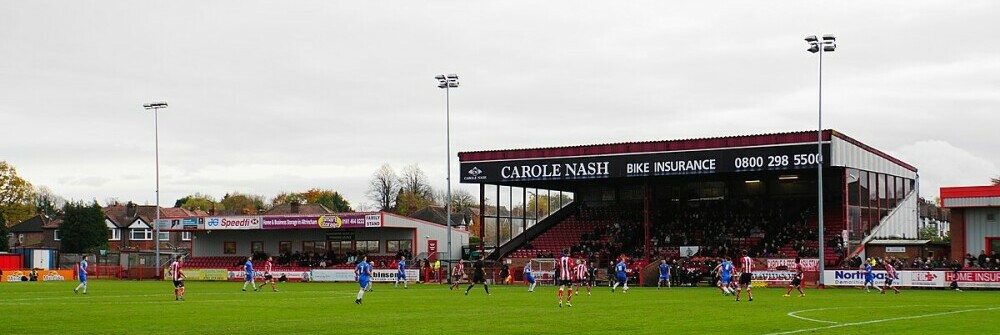
Next up, the Robins were drawn away again, this time at Birmingham City of the first division. Ultimately, the Blues were to be relegated in last place, so perhaps it was no surprise that the non-leaguers repeated the scoreline of their victory against Blackpool in the previous round. Regardless of Birmingham’s performance in the league that season, it was by any account a remarkable victory over Birmingham City, a result that reverberated through the football landscape.
In the fourth round, Altrincham were to come unstuck at York City’s Bootham Crescent by a score of 2-0. Having been giant killers versus Arsenal at the same stage last season, York had obviously played the game in the right frame of mind, determined that they would not be victims of giant killing themselves.
The narrative would not be complete without acknowledging the mixed emotions that accompany upsets. For the supposed bigger team, such defeats were stark reminders of the vulnerability that comes with complacency. The impact on team morale cannot be underestimated either. Birmingham City, although having a poor season at the time of their defeat to Altrincham, completely collapsed, garnering just 11 more points from the 51 that they had left to play for.
In contrast, those jubilant scenes of smaller teams basking in their moment of glory provided a stark juxtaposition. This push and pull between expectation and realisation are what adds depth to the FA Cup’s story each year.
Reflections on the 1985-86 Season: A Review of the FA Cup
So, my question to you today is, what made the 1985-86 FA Cup season stand out? I’m going to walk you through the main factors without the usual fanfare. Was it a turning point for English football post-Heysel? Given events that were to transpire three years later, I’d say no. However, what it did show was that English domestic football could serve up good, exciting games with twists and turns along the way.
This much was evident in both the FA Cup season and the race for the First Division Title. A lot was happening very quickly, and this season gave us the rough and tumble that fans crave, with the FA Cup matches providing a high-stakes backdrop.
Reflecting on the past often tells us where we’re heading. For the teams involved and the fans in the ground or watching at home, the 1985-86 FA Cup season was much like any other – the same rituals, the usual dose of hope, with a pinch of ambition, and an undiminished passion for the beautiful game. Just a different cast.