
When it comes to 1980s British TV, the characters stole the show, leaving a mark that’s still treasured. We’re talking about larger-than-life personalities that became like family to viewers at home.
Shows like Only Fools and Horses, The Singing Detective and Open All Hours brought us memorable personas. Del Boy Trotter with his cheeky charm and dreams of striking it rich in Only Fools and Horses was a standout. Despite not-so-great odds, his endless optimism left everyone cheering for him. Even though we all knew that he was ultimately bound to fail.
Philip Marlow, aka The Singing Detective, was a hard-bitten, bitter man played by Michael Gambon. His cultural impact was enormous. He won a BAFTA for his portrayal and established himself as a major star.
Arkwright’s impact was significant in shaping the landscape of British sitcoms. His humour and quirks, brought to life by Ronnie Barker’s brilliant performance, left a legacy of laughter and nostalgia for audiences.
These characters did more than entertain. They reflected and commented on society, usually through humour and wit, however dark. This storytelling approach helped tackle social issues, allowing viewers to both laugh and think.
Besides, these TV characters gave life to some iconic catchphrases and unforgettable moments. They still buzz around today. Phrases like ‘Lovely jubbly!’ and ‘Mange tout, Rodney’ and their antics still pop up in everyday conversation. That’s serious staying power!
In great television shows, great stories are told through the interactions of the great characters in them. This demands fine acting performances, but also excellent writing and production behind the scenes.
Del Boy Trotter
From Only Fools and Horses, Del Boy Trotter was played by David Jason. He is known for his charm and endless get-rich-quick schemes. Del Boy is a quintessentially optimistic and resilient character, always believing that his next venture will lead to fortune.
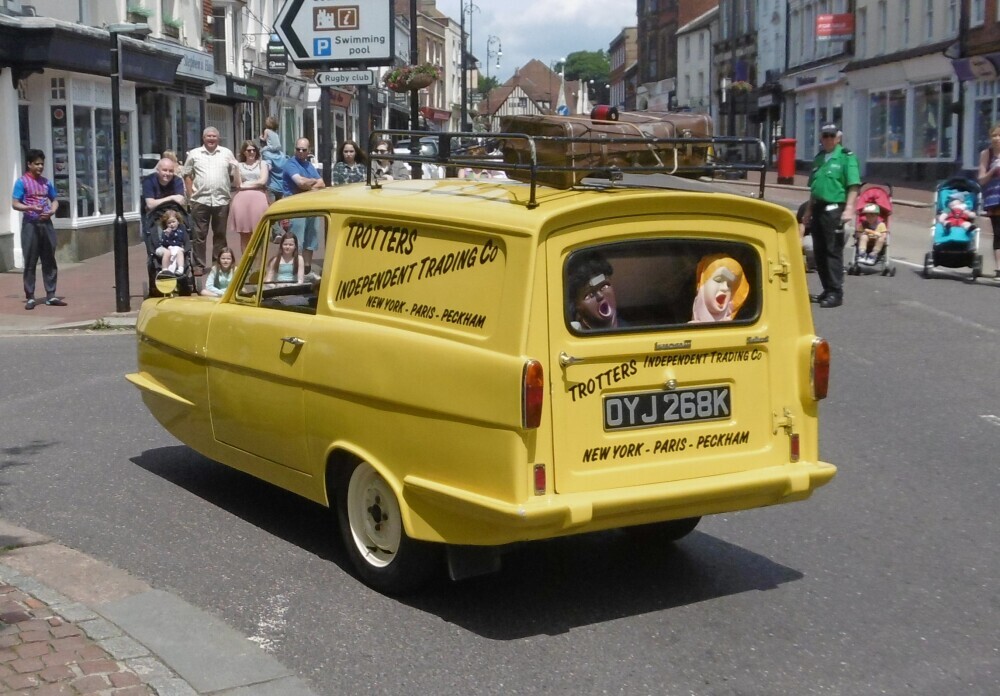

Del Boy has become iconic in British pop culture. His relationship with his younger brother Rodney (Nicholas Lyndhurst) is filled with both comedic banter and heartfelt moments. This is the emotional core of the series.
Despite his usually dubious business dealings, Del Boy’s deep love for his family and his unwavering determination make him a beloved character. He embodies the spirit of working-class London.
Don’t forget also that initially the brothers lived with Grandad (Lennard Pearce) before Uncle Arthur (Buster Merryfield) moved in when Grandad had passed away.
And then we get to their local – the Nag’s Head. Landlord Mike Fisher, played by Kenneth MacDonald, just about keeps order on a rogues’ gallery. There’s Boycie – full name, Terrance Aubrey Boyce and his wife Marlene.
Not forgetting Trigger, memorably portrayed by Roger Lloyd-Pack (“Alright, Dave?”). There are Denzil (Paul Barber) and Mickey Pearce (Patrick Murray). Finally, we have Del Boy and Rodney’s love interests – Raquel (Tessa Peake-Jones) and Cassandra (Gwyneth Strong).
Arkwright
Arkwright, the beloved TV shopkeeper was played by Ronnie Barker. He is the main character in the classic British sitcom Open All Hours. The show, which aired from 1973 to 1985, is set in a small Yorkshire town and revolves around the day-to-day operations of Arkwright’s corner shop.
Known for his penny-pinching ways, Arkwright is will often go to great lengths to avoid spending money and maximize profits. Notably, he refuses to replace the shop’s antiquated till, which has a tendency to snap shut. Arkwright has a distinctive stutter, which Barker used to great comedic effect, adding to the charm and humour of the show.
Arkwright’s interactions with his nephew and assistant, Granville, played by David Jason, form the heart of the series. Granville often finds himself at the receiving end of Arkwright’s schemes and eccentricities. These result in a series of humorous situations. Deep down, we believe that Arkwright cares for his sister’s son.
We certainly know that Nurse Gladys Emmanuel is the object of his affection. This adds a touch of warmth and humanity to his persona. Despite his miserly nature, Arkwright is a lovable character.
Barker’s portrayal of Arkwright is a masterclass in comedic acting. It follows his portrayal of Norman Stanley Fletcher in the seventies prison sitcom Porridge. Both characters remain cherished parts of British television history.
The Doctor (aka, Doctor Who)
In the eighties, we had four Doctors. The Fourth Doctor (Tom Baker), the Fifth Doctor (Peter Davison), the Sixth Doctor (Colin Baker) and the Seventh Doctor (Sylvester McCoy). Each actor brought their own facets to the Doctor. Tom Baker had a particular twinkle in his eye and an overlong woollen scarf.
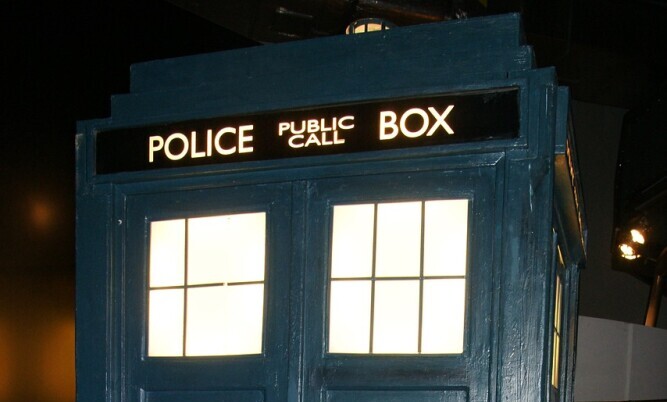
When he became the Doctor, Peter Davison was the youngest actor to play the role. He brought a boyish charm to the role. This was much in the way of his other major role to date, that of Tristram Farnham in All Creatures Great And Small. Davison wore an Edwardian cricketer’s getup, complete with cricket ball.
Colin Baker, the Sixth Doctor, portrayed him as an arrogant and flamboyant character. He wore brightly coloured, mismatched clothes. He had a brash and often patronising air about him. Not for Baker, the warmth of the Doctor’s previous incarnations. He was the victim of internal BBC politics and did not spend as long in role as he would have liked to.
Finally, we had Sylvester McCoy. Prior to taking up the role as the Doctor, McCoy had been a part of Vision On and Eureka! He brought a nuanced appeal to the role. Initially, McCoy’s Doctor was quirky and sympathetic. He soon became darker, deeper, more Machiavellian.
Of course, The Doctor usually had a sidekick. Sometimes, it would be a robot dog – K9, voiced by John Leeson or David Brierly. More often though, they were human or humanoid.
Members of this group include Adric (Matthew Waterhouse); Romana II (Lalla Ward); Nyssa (Sarah Sutton); Tegan (Janet Fielding); Vislor Turlough (Mark Strickson); Peri Brown (Nicola Bryant); Mel Bush (Bonnie Langford) and Ace (Sophie Aldred).
Arthur Daley
From Minder, Arthur Daley was played by George Cole. A lovable rogue with a knack for dodgy deals, and a coward at heart. Arthur’s minder was Terry McCann, played by Dennis Waterman, who also sang the theme tune, although he didn’t write it. That credit belonged to his second wife, Patricia Maynard née Partridge.
Other characters from the show include Dave Harris played by Glynn Edwards. Dave was the barman and co-owner with Arthur of the Winchester Club – Arthur and Terry’s local.
Then there was Arthur’s would-be nemesis. Sergeant Albert “Charlie” Chisholm, played by Patrick Malahide. Chisholm was never quite clever enough to ever successfully pin a charge on Arthur. But not through want of trying.
Kerr Avon
From Blake’s 7, Kerr Avon was played by Paul Darrow. He’s a complex anti-hero. A brilliant, cynical computer expert, he was known for his pragmatic, self-serving nature. Initially, he was motivated by personal gain. Albeit reluctantly, he eventually evolved into a leader. Kerr would frequently clash with others over his ruthless, logical approach to survival and rebellion.
René Artois
René was the bar owner played by Gordon Kaye, in the popular British sitcom ’Allo ’Allo! Airing from 1982 to 1992, it was set around a small café in Nazi-occupied France during World War II. Our reluctant hero, René is caught in a web of intrigue. He must balance the demands of the German occupiers, the French Resistance, and his own escapades.
René is portrayed as a quick-witted and resourceful man. Despite this, he often finds himself in absurd and precarious situations. The café serves as a hub for clandestine activities. Amongst others, there are two British airmen and a valuable painting, The Fallen Madonna with the Big Boobies.
Despite the chaos around him, René manages to maintain a semblance of normalcy in the café. At the same time, he juggles his relationships with his wife, Edith, and his various mistresses.
Kaye’s performance as René is famed for his impeccable comedic timing. He also has the knack of conveying both exasperation and charm. Then we have his frequent direct addresses to the audience, the breaking of the fourth wall. This adds a unique layer to the show, making viewers complicit in his schemes.
René Artois remains a highlight of British comedy. A character celebrated for his humour and enduring appeal.
Roland Rat
A puppet character who became a TV sensation in the 1980s. He is credited with saving TV-am when he joined the ailing ITV breakfast network in 1983. He remained there for two years before being poached by the BBC. Roland Rat was created, operated and voiced by Dave Claridge.
His stock in trade was his cheeky humour and distinctive, overblown personality. According to writer Colin Bostock-Smith, this was established by Claridge and Richard Curtis.
He was a beloved figure on British television during the 1980s. Known for his catchphrases and entertaining antics, he became a cultural icon and helped boost the popularity of the shows he appeared on.
Inspector Morse
In the series Inspector Morse, the title character was played by John Thaw. A brilliant detective with a love for classical music. Novelist Colin Dexter created Morse – the first novel (Last Bus To Woodstock) was released in 1975.
Morse’s interests and passions were many and varied. They included music (especially opera, with Mozart and Wagner among his favourite composers). Plus, poetry, art, the classics, British real ale, solving cryptic crossword clues, and classic cars (he drove a Mark 2 2.4l Jaguar).
Morse had a sidekick, Lewis. A Welshman in the novels, of course, Lewis was converted into a Geordie in the TV series, with the casting of Kevin Whately. Of course, Whately would go on to star in his own right in the sequel, Lewis.
Bet Lynch
From Coronation Street, Bet was known for her bold fashion sense and strong personality. Played by Julie Goodyear, she was initially the barmaid, and later the landlady of the Rovers Return.
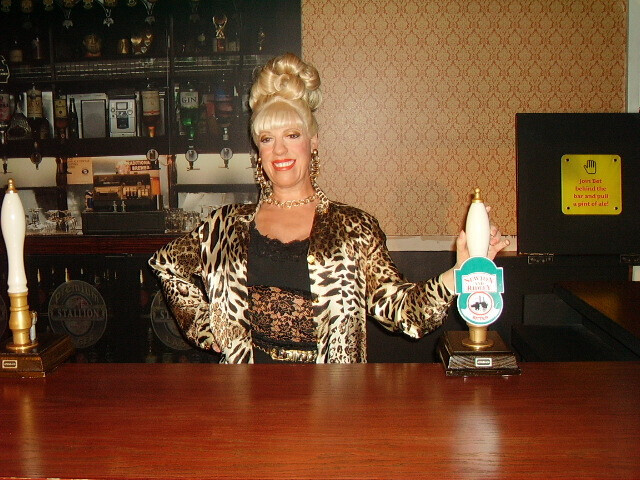

She first appeared on the show on 25 May 1966. She then left to join the local Oldham Repertory Theatre. She appeared in several other TV roles to gain more experience, before becoming a regular character in 1970. Bet has a flamboyant style. She often wears leopard print clothing and sports a beehive hairstyle. This look is known to have inspired the drag character of Freddie Mercury in Queen’s music video for I Want to Break Free.
Bet’s backstory includes a challenging upbringing. She left home at a young age and had to give up a son for adoption – a storyline partly informed by Julie Goodyear’s own shotgun marriage whilst pregnant at 17. Bet worked in various factories before becoming a barmaid. She was feisty, resilient, but most of all, a survivor. Bet was wary of men due to her unlucky experiences in love.
Philip E. Marlow
Played by Michael Gambon, Marlow was the main character in Dennis Potter’s 1986 magnum opus, The Singing Detective. In it, the author Marlow flits between three worlds. Hospitalised due to psoriatic arthropathy he experiences hallucinations.
Struggling with writer’s block he imagines himself as a noir detective. There’s a murder mystery to solve, reflecting his desire for control and escape from reality.
His hallucinations and paranoia colour his interactions with staff and patients. Both reveal his vulnerability and bitterness. At the same time, he revisits traumatic memories from his childhood. These include his mother’s infidelity and suicide. His father’s struggles too, shape his adult psyche and influence his detective fantasies.
The Legacy and Influence of 1980s British TV Characters
Characters from 1980s British TV didn’t just vanish into the archives. They can still be watched on the likes of BBC iPlayer, BritBox, U&Dave and even sites like Amazon Prime or Netflix. Their legacy lives. It influences modern TV creators and audiences alike.
How many modern TV shows draw inspiration from the charm of Only Fools And Horses? The Singing Detective’s innovative narrative structure and its blending of reality with fantasy play a great part in influencing subsequent television productions with its non-linear storytelling and complex character development.
Fans today remain incredibly engaged, often forming online communities or conventions that celebrate these shows, and these characters. Whether you’re new to them, or a dyed-in-the-wool fan, connecting with these communities can be a brilliant way to dive deeper into the characters you love and discover new perspectives.
The nostalgia factor is massive. Even as new forms of entertainment continue to emerge, there’s comfort and joy to be had in revisiting these characters and stories. They were integral to the fabric of British television in the 1980s. They continue to be celebrated for their contributions to TV history.