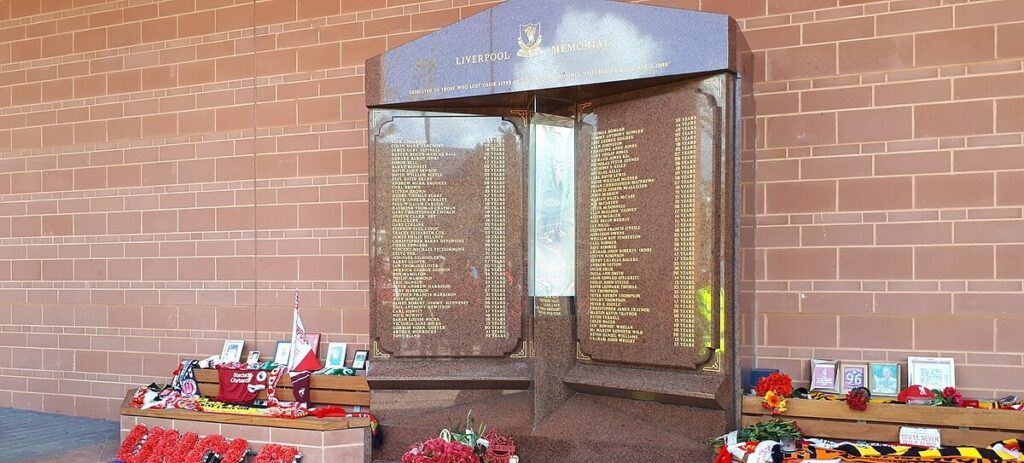
1989 saw a fitting tribute in the Liverpool v Everton FA Cup Final.
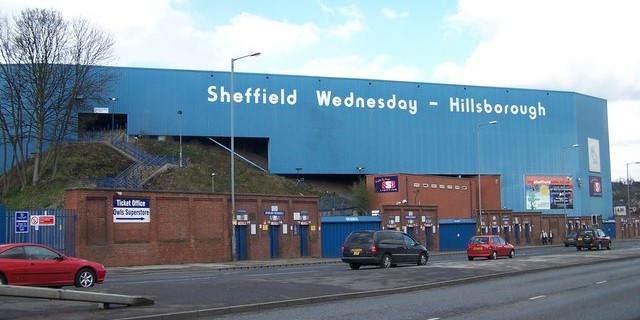
This article covers that, but the bigger story is one of the darkest chapters in football history. Unfolding during the 1988/89 FA Cup, the semi-final clash between Liverpool and Nottingham Forest on 15 April 1989 was supposed to be a riveting sporting contest yet it became synonymous with sorrow and loss.
To be able to comprehend the magnitude of what transpired, it’s necessary to cast a light on the series of missteps leading up to the disaster. The stage was set at Sheffield’s Hillsborough Stadium, a venue with a chequered history of crowd control issues. Tottenham Hotspur fans who were in the Leppings Lane End at the 1981 semifinal versus Wolves had suffered crushing and hundreds of fans were allowed onto the pitch to escape from the crush. 38 fans were treated for their injuries.
Hillsborough was not used as a semifinal venue again until 1987 when Leeds United played Coventry City. Again, serious overcrowding in the Leppings Lane End. Then again, the same phenomenon happened a year later in 1988.
Lessons Not Learnt
Lessons were clearly not learnt as on 15 April 1989 another overcrowding situation arose at the Leppings Lane End as too many supporters were permitted entry into the standing terraces due to poor control outside the stadium. This catastrophic miscalculation would this time lead to a fatal crush resulting in the deaths of 97 individuals. Countless others would be scarred for life.
The immediate consequences of that fateful day were profound and widespread. Families were propelled into mourning; survivors were left bearing emotional and physical scars and a stunned community was left grappling with disbelief. And football faced an urgent call for introspection and change.
There are those who would have called the whole of the rest of the season off after 15 April. On the other hand, those who wished for the season to continue would have found that the final was a fitting epitaph to the victims of the disaster. Continuing with the season meant that we saw the indomitable spirit of Liverpool both as a team and as a city.
As we move forward into the journey of the Reds’ 1988/89 FA Cup campaign, we will see how the sorrow of the semi-final would bond the city and supporters in a shared pursuit of glory – a rare form of solace in remembrance of those affected by the tragedy.
An Epic Struggle of Rivals: Liverpool’s Victory in the Merseyside Derby
In the wake of adversity, the stage was set for an encounter that cut through the ordinary boundaries of football rivalry. The 1989 FA Cup Final brought together Liverpool and Everton in a Merseyside Derby laden with emotional intensity. It was a fixture that offered not just a chance at silverware but a moment of solace for a community in grief.
The match played at Wembley Stadium before a crowd of spectators sharing a collective heartbeat for Merseyside, was a seesaw battle. Liverpool emerged victorious, securing a bittersweet 3-2 win with echoes far beyond the confines of the pitch.
Liverpool’s performance was workmanlike. On 4 minutes, a Steve Nicol long ball into the right-hand channel was played into John Aldridge’s path by Steve McMahon. Aldridge made no mistake with a lofted shot into the top right-hand corner leaving Neville Southall with no chance.
Then the game seemed to be ambling to a 1-0 victory for Liverpool until the intervention of Everton substitute Stuart McCall almost at the point that they were tying red ribbons on the cup. It was 1-1 and there would be another half an hour to see if the teams could be separated.
Within five minutes of the restart, the game woke up. Another through ball from Steve Nicol, this time cutting out the middleman, found Liverpool substitute Ian Rush in the Everton penalty area. With his back to goal, Rush swivelled and placed a right foot shot past Southall, 2-1.
Everton was not at the game to allow their neighbours an easy ride though, and with three minutes remaining before halftime of extra time, they equalised again. A headed clearance from an Everton corner found that man Stuart McCall again. This time, on the edge of the Liverpool penalty area, he collected the ball on his chest before lobbing the ball into the goal for 2-2. In so doing, he became the first substitute ever to score twice in an FA Cup Final.
Before the whistle to end the first period of extra time, Rush had repeated both his own feat of three years earlier and McCall’s feat of three minutes earlier. This time, a clipped left-wing cross from John Barnes found the Welshman free in the box. His glancing header made it 3-2. With little of note happening in the second period of extra time, the tie was thusly settled, and it was Liverpool’s Cup.
The final whistle, however, confirmed Liverpool as the victors, capturing the hearts of their supporters and uniting a city in honour of those they had lost.
The significance of this derby in a final was manifold; Liverpool’s victory apart, Everton fans helped make it a poignant symbol of Merseyside unity. In a season overshadowed by tragedy, the triumph reflected the indomitable spirit of Liverpool the football club but also the wider community of the city as well.
As fans, Blues and Reds, left Wembley, was their shared experience a reminder of football’s power to unite even in the darkest times? The behaviour of English football fans in the two decades leading up to 15 April 1989 had contributed greatly to both the physical conditions within stadiums and the attitude of wider society, which had contributed greatly towards shaping the conditions for the tragedy.
So, yes, it could be said that football’s power to unite was in evidence at Wembley on 20 May 1989. Conversely, the behaviour of football fans of many different clubs prior to 15 April 1989 had led directly to the fences which were a major contributory factor to the disaster.
I think it safe to say that Liverpool’s victory took on an emblematic value, and football did become a conduit for mourning, camaraderie, and ultimately, hope.
Capturing Glory: Liverpool’s and Everton’s Journey to Wembley
In this playing of the FA Cup, the Final took on an almost mythical timbre. Previously in this series, I had written at length about the finalists’ respective journeys to the Twin Towers. Understanding the narratives of the finalists adds extraordinary depth to the story of the Final. Of course, this year, the Hillsborough semi-final was the narrative of the route to Wembley.
So, briefly: Liverpool’s quest for the coveted FA Cup saw a mix of emphatic victories and gritty performances. A 3-0 away win at Carlisle set the Reds on their way. Then a tricky tie at Millwall was navigated comfortably, 2-0. A more challenging assignment was overcome with another away win, this time 3-2 at Hull City. Then, a home quarter-final tie versus Brentford of the third division. Played the week before an early Easter, it looks on paper, like a 4-0 stroll in the March rain. However, if Richard Cadette’s early effort from Andy Sinton’s through ball had not slid just wide of the Kop end goal who knows…
Everton’s journey started at the Hawthorns where a 1-1 draw gave them a second bite of the cherry which they took with a 1-0 win at Goodison. Their next tie was a trip down the M5, where another 1-1 draw led to another Goodison Park replay where they halted the Pilgrims’ progress 4-0.
Next, another away tie saw Barnsley defeated 1-0 win at Oakwell. In their quarter-final, played the day after Liverpool’s win over Brentford, a single Stuart McCall goal knocked out holders Wimbledon.
In their semi-final, played at Villa Park, yet another 1-0 win was enough for the Blues to defeat a spirited Norwich City; Pat Nevin scoring the goal. Like Hillsborough, the sun shone in Birmingham too. But that was where the similarities between the two events ended.
Unlikely Heroes: The Bark of the FA Cup’s Underdogs
Three third-round ties ended in upsets, but after that matches generally went to form. At Gander Green Lane in Sutton, London on 7 January 1989, there was a seismic result as non-league Sutton United defeated Coventry City of the first division. By the time this game was played, Sutton had already played three ties having started in the fourth qualifying round.
The 1987 winners of the FA Cup had numerous chances to score first – with three good chances in the first two minutes. But these were not taken and just before halftime, Tony Rains opened the scoring. David Phillips equalised on 52 minutes, but Matthew Hanlan’s volley seven minutes later was enough to see Sutton into the fourth round. There was a bumpy return to earth for the Londoners though as in the fourth round they experienced an 8-0 trouncing at Carrow Road.
At Valley Parade, Coventry’s opposition in 1987’s Final, Tottenham Hotspur were knocked out by second-division Bradford City. Just before halftime, a somewhat scuffed effort, from the edge of the penalty area by right back Brian Mitchell, was enough to earn the win for the Bantams.
Then the tie between West Ham and Arsenal ended with a win for the soon-to-be relegated Hammers over the eventual League Champions. At Upton Park, the result was a 2-2 draw as Alan Dickens and a Steve Bould own goal answered Paul Merson’s brace. So, the tie seemed to have swung the tie in Arsenal’s favour. However, Leroy Rosenior settled the replay for the Clarets with the only goal of the game at the Clock End.
In all three of these ties, we see that resolve, determination, and a little luck can level the playing field. Memorable events all, they were all unpredictable. Fans of each of these underdogs recall the games as if they had happened yesterday. The nature of the FA Cup, a random draw setting up such (on paper) mismatches is the centrepiece of its enduring appeal.
As we consider the impacts of these underdog stories, we are now going to consider the legacy of this year’s tournament. Ultimately, the feats on the pitch pale into insignificance compared to the profound narrative that unfolded off it; the tragedy of the Hillsborough Disaster overshadowing everything.
Honouring the Past, Shaping the Future
Ultimately, the tale of the 1988/89 FA Cup was dominated by the tragedy of Hillsborough. Liverpool’s victory was a testament to their resilience amidst profound loss and adversity. In the grand narrative of that season, the heartrending events of Hillsborough hold a profound lesson. Whereas the triumph at Wembley provided a moment of solace, the harrowing loss of 97 lives implores us to pause and reflect.
Since that fateful day, not only football, but sport in general has faced sweeping reforms in stadium safety and crowd management. Thanks to the Taylor Report into the disaster, fundamentally, the way that venues are constructed has been revolutionised. No longer are steep standing terraces and high fences a part of stadium architecture. Instead, the emphasis on crowd safety has become paramount, preserving the sanctity of sport and life above all.
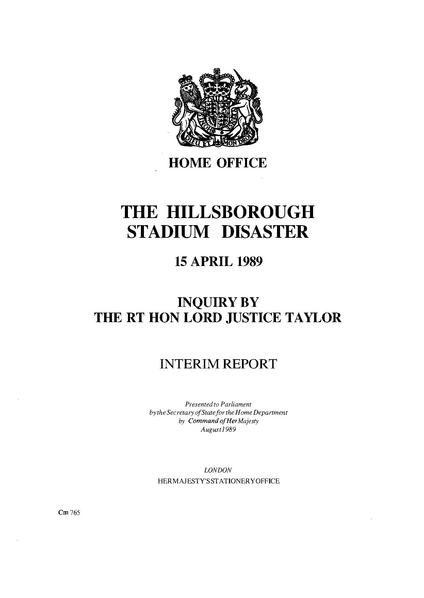
The legacy of the Hillsborough Disaster transcends mere regulations. It has been a continuous battle for justice, spearheaded by the relentless efforts of grieving families and a supportive community. Their quest is a poignant reminder of the power of unity and the unyielding human spirit in seeking accountability and truth. And as we discuss the human cost of those tragic events, it underscores the importance of vigilance and empathy in every facet of community and public events.
In closing, the 1988/89 FA Cup is not only a chapter in the story of football but is also a pivotal moment in cultural awareness and safety advocacy. It reminds us that human life is the most important aspect of sport – requiring us to honour those lives lost; to acknowledge both the triumphs and heartaches that weave the fabric of our shared histories. Surely, the echoes of the past must continue to inform our present and our future, cultivating a safer, more conscientious environment in football and in communities worldwide.
My wish is that as we reflect on the events of the 1988/89 FA Cup, we can carry forward the courage and determination exemplified by all those touched by 15 April 1989. As we support ongoing efforts for safety, remembrance, and justice, we’re not only fans of the game but guardians of its legacy and humanity.