
1980, the start of a new decade. The 1970s had seen a continuation of some of the themes of the 1960s, such as the growth of women’s rights, gay rights, and environmental movements. The Vietnam War had ended, the Watergate scandal had led to the resignation of President Richard Nixon, the direct involvement of the United States in the Vietnam War had ended, and world leaders had grappled with an energy crisis, inflation. So just what were the significant events of 1980?
The historical context of 1980 is critical for a deeper understanding of the events that transpired. It was a period marked by the Cold War’s icy grip, a global economy at a crossroads, and a society on the cusp of the digital revolution.

There were a great number of significant occurrences which defined 1980. From international conflicts that shifted power balances to revolutionary advances in technology, these were the catalysts for change that set the stage for the modern world.
International affairs and relations took dramatic turns. The next section will delve into the high-stakes gambits of world powers and the resonating effects felt across continents.
The World Stage: International Affairs and Relations in 1980
The year 1980 was not only the beginning of a new decade but also a nexus of international events that continue to resonate today. Among the most significant was the ongoing Soviet invasion of Afghanistan. Sparking outrage and activating a series of domino effects in global politics, this conflict led the United States to take a stand, boycotting the 1980 Moscow Olympics. This action was not just a statement on athletic cooperation, but a full-frontal diplomatic protest against Soviet aggression.
This year also marked the ignition point of the Iran-Iraq War, a protracted and devastating conflict that began in September. The war would go on to shape Middle Eastern geopolitics for years to come, involving superpowers in its convoluted web of alliances and enmities.
But 1980 wasn’t just about conflicts. It witnessed a beacon of hope as Zimbabwe emerged from the shadows of colonial rule. 18th April marked its birth as an independent nation, symbolizing a critical step forward in the decolonisation movement which had been sweeping across Africa since the 1950s. The international community celebrated Zimbabwe’s independence, seeing it as a milestone in the struggle against imperialism.
In the US Presidential Election on 4th November, Republican challenger Ronald Reagan, the former actor and Governor of California defeated the incumbent Jimmy Carter. It was a landslide, with Reagan winning forty-four states to give him 489 electoral college votes against Carter’s 49.
As these pivotal events on the world stage were unfolding, a less visible but equally significant revolution was taking place—one that would eventually connect and redefine the modern world: the rise of personal computing.
Economic Shifts and Technological Breakthroughs
The year 1980 wasn’t just pivotal politically; it marked significant milestones in economics and technology too. As the decade began, the United States and many other countries faced economic challenges characterized by a combination of stagnation and inflation, a state termed ‘stagflation’.
One of the year’s most unforgettable incidents was the eruption of Mount St. Helens in Washington State. This event was not only a powerful reminder of nature’s force but also carried substantial economic repercussions for the local timber and tourism industries, among others. It spurs a reinvigoration in the study of volcanology, with valuable lessons on disaster preparedness and environmental impact.

That same year, economies worldwide grappled with an energy crisis precipitated by reduced oil output following the Iranian Revolution. This crisis exposed the vulnerabilities of an energy-dependent world and underscored the need for diversification and renewable energy resources.
Capping off a year of significant scientific strides was the Voyager 1 spacecraft’s close approach to Saturn. Launched in 1977, Voyager 1 had already had a flyby of Jupiter in March 1979. Saturn’s flyby in November 1980 delivered stunning images and invaluable data, enhancing our understanding of the solar system, and igniting the public’s interest in space exploration. It stood as a testament to human curiosity and the unending quest for discovery.
1980 saw the dawn of the personal computing revolution. Work had been going on behind the scenes at an IBM facility in Boca Raton, Florida which would see the launch of the IBM Personal Computer the following year. This would help to usher in a new era of technology that changed the way businesses operate and people interact with the world. It was a true turning point in the history of computing, potentially more impactful than many geopolitical happenings of the time – as the world would become increasingly digitized, with economies striving for resilience in the face of energy uncertainty.
Cultural Milestones and Societal Change
The emergence of an iconic arcade game in 1980 did far more than just entertain. Pac-Man became a staple of pop culture, influencing entertainment and marketing for decades. Its widespread appeal underscored the era’s evolving relationship with technology and leisure. More than just a game, it was a symbol of the digital revolution’s growing reach into everyday life.
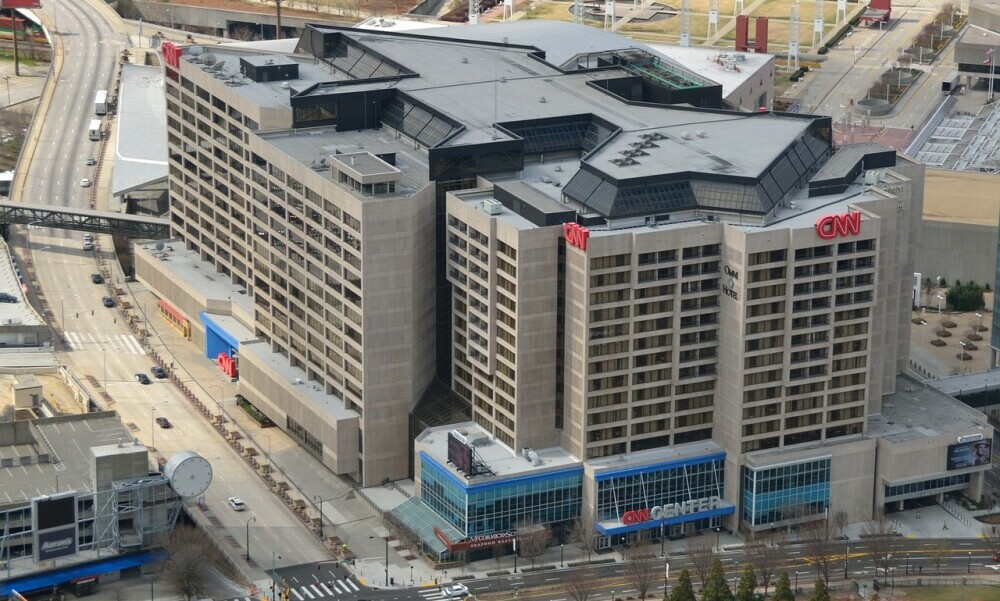
In the realm of media, on 1st June, the launch of Ted Turner and Reese Schonfeld’s Cable News Network (CNN) as the first 24-hour news network marked a turning point in journalism and how people accessed information. This innovation not only fulfilled the audience’s desire for constant news updates but also set a new standard for media coverage that is still seen across countless platforms today.
In Europe, Poland’s Solidarity movement, led by shipyard electrician Lech Walesa, represented an unprecedented resistance against Communist rule. It wasn’t just a political movement; it became a beacon of hope for civil society advocating for freedom and human rights. The repercussions of its stand against oppression would ripple through the Eastern Bloc, foreshadowing monumental changes to come.
Although it wasn’t necessarily clear as the curtain fell on 1980, the year’s events had left an indelible mark on society. Music, fashion, and entertainment would evolve from the trends set during this pivotal time. The societal change initiated by a video game, a news network, and a political movement illustrated the dynamic and transformative power of cultural milestones. In the face of adversity, innovation, and creativity thrived, setting the stage for a decade of significant growth and change.
Deaths in 1980
There follows a list of notable deaths in 1980. Chief amongst them I would argue is that of the Beatle John Lennon. He was shot in the back by a supposed fan, Mark David Chapman, outside his apartment building in New York on 8th December 1980.
January
January 3 – Joy Adamson, Austrian conservationist and author (b. 1910)
January 7 – Simonne Mathieu, French tennis champion (b. 1908)
January 8 – John Mauchly, American physicist and inventor (b. 1907)
January 11 – Barbara Pym, English novelist (b. 1913)
January 13 – Andre Kostelanetz, Russian conductor and arranger (b. 1901)
January 18 – Sir Cecil Beaton, English photographer (b. 1904)
January 27 – Peppino De Filippo, Italian actor (b. 1903)
January 28 – Franco Evangelisti, Italian composer (b. 1926)
January 29 – Jimmy Durante, American actor, singer and comedian (b. 1893)
January 30 – Professor Longhair, American musician (b. 1918)
February
February 2 – William Howard Stein, American chemist, Nobel Prize laureate (b. 1911)
February 3 – Hanna Rovina, Russian-Israeli actress (b. 1889)
February 7 – Sir Richard Williams, Royal Australian Air Force officer (b. 1890)
February 8 – Nikos Xilouris, Greek pop singer (b. 1936)
February 19 – Bon Scott, Scottish-Australian rock singer (AC/DC) (b. 1946)
February 29 – Yigal Allon, Israeli politician and army general (b. 1918)
March
March 1 – William Ralph ‘Dixie’ Dean, English football player (b. 1907)
March 24 – Óscar Romero, Salvadorian Roman Catholic archbishop (b. 1917)
March 28 – Dick Haymes, Argentine actor and singer (b. 1918)
March 29 – Mantovani, Anglo-Italian conductor and arranger (b. 1905)
March 31 – Jesse Owens, American Olympic athlete (b. 1913)
April
April 10 – Kay Medford, American actress and singer (b. 1919)
April 15 – Jean-Paul Sartre, French philosopher and writer, Nobel Prize laureate (b. 1905)
April 29 – Alfred Hitchcock, British film director (b. 1899)
May
May 4 – Josip Broz Tito (Marshall Tito), Yugoslav communist military and political leader, 19th Prime Minister of Yugoslavia and 1st President of Yugoslavia (b. 1892)
May 12 – Lillian Roth, American actress (b. 1910)

May 18 – David A. Johnston, American volcanologist (b. 1949)
May 18 – Ian Curtis, English musician and singer (b. 1956)
June
June 24 – Boris Kaufman, Russian cinematographer (b. 1897)
July
July 1 – C. P. Snow, British physicist and novelist (b. 1905)
July 24 – Peter Sellers, British comedian and actor (b. 1925)
July 26 – Kenneth Tynan, English theatre critic (b. 1927)
July 27 – Mohammad Reza Pahlavi, Shah of Iran (b. 1919)
August
August 19 – Otto Frank, German father of Jewish diarist Anne Frank (b. 1889)
August 26 – Tex Avery, American animator and director (b. 1908)
August 29 – Franco Basaglia, Italian psychiatrist and professor (b. 1924)
September
September 25 – John Bonham, British rock drummer (Led Zeppelin) (b. 1948)
October
October 6 – Hattie Jacques, British actress (b. 1922)
October 27 – Steve Peregrin Took, British rock musician (b. 1949)
October 31 – Elizebeth Smith Friedman, American cryptographer (b. 1892)
November
November 4 – Johnny Owen, Welsh professional boxer (b. 1956)
November 7 – Steve McQueen, American actor (b. 1930)
November 22 – Mae West, American actress (b. 1893)
November 24 – George Raft, American actor (b. 1901)
November 25 – Herbert Flam, American tennis player (b. 1928)
November 29 – Dorothy Day, American journalist and social activist (b. 1897)
December
December 3 – Sir Oswald Mosley, British fascist leader (b. 1896)
December 8 – John Lennon, English singer-songwriter and guitarist (b. 1940)
December 10 – Patriarch Benedict I of Jerusalem (b. 1892)
December 16 – Colonel Sanders, American fast-food entrepreneur (b. 1890)
December 18 – Alexei Kosygin, Soviet politician, Premier of the Soviet Union (b. 1904)
December 21 – Marc Connelly, American playwright (b. 1890)
December 24 – Karl Dönitz, German admiral and 4th President of Germany (b. 1891)
December 24 – Heikki Liimatainen, Finnish Olympic athlete (b. 1894)
December 26 – Richard Chase, American serial killer & cannibal (b. 1950)
1980 In Summary
1980 was a year of epochal change. No more so than Ronald Reagan’s election. This led to a much more assertive US Foreign policy in relation to the Cold War and the Soviet Bloc. Also, much work was carried out behind the scenes in preparation for 1981’s launch of the IBM PC which led to significant change in how computers were seen. At last, computers would become accessible to small businesses and households.
