
1986 was a year of significant events and it’s tricky to include all of them here. However, here is what I consider to be a reasonably succinct resume. And, there’s no mention of any footballers using their hands to gain an advantage.
Taking place on 26 April 1986, the explosion at the Chernobyl Nuclear Power Plant near Kyiv, in Ukraine, in the then Soviet Union was an unprecedented nuclear disaster. The sheer scale of the calamity made it a defining moment of the entire 80s decade. For a time, it shook people’s faith in nuclear energy to its core. In the early hours, reactor 4 went out of control during a test at low power, leading to an explosion and fire that demolished the reactor building and released large amounts of radiation.
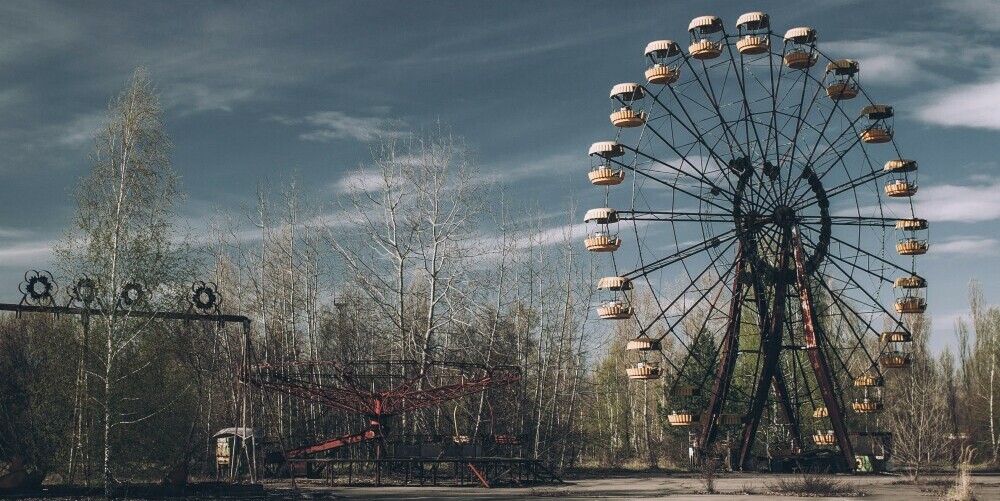
The immediate impact was catastrophic, releasing vast amounts of radioactive materials into the atmosphere, impacting not just the nearby town of Pripyat but spreading across borders. The long-term environmental and health repercussions continue to be a subject of study, with the zone around Chernobyl remaining uninhabitable.
In those early days of Gorbachev’s leadership of the Soviet Union, glasnost, or openness, had not yet established itself fully in the way of Soviet communications with the rest of the world. It was only when scientists in Sweden detected heightened radiation levels that the world learned the extent of the disaster. The government’s delayed response gave rise to criticism, while the global community rallied with aid.
Chernobyl’s fallout reached far beyond health and environmental damage. It forced a re-evaluation of nuclear safety protocols worldwide, heightening regulations and shifting energy policies. This event still sparks discussion and analysis, particularly concerning the bravery and sacrifices of the first responders, who risked their lives to contain the disaster.
As stories of human courage emerged from the shadow of Chernobyl, the world was reminded of another heart-wrenching event. This time, the sky was the stage. Barely three months prior to the nuclear accident, viewers across the globe had witnessed another tragedy: the disintegration of the Space Shuttle Challenger.
Tragedy in the Skies: The Challenger Space Shuttle
On the morning of 28 January 1986, the Space Shuttle Challenger broke apart just 73 seconds into its flight, leading to the loss of all seven crew members. This catastrophe shook the United States and the world, marking one of the darkest moments in space exploration history.
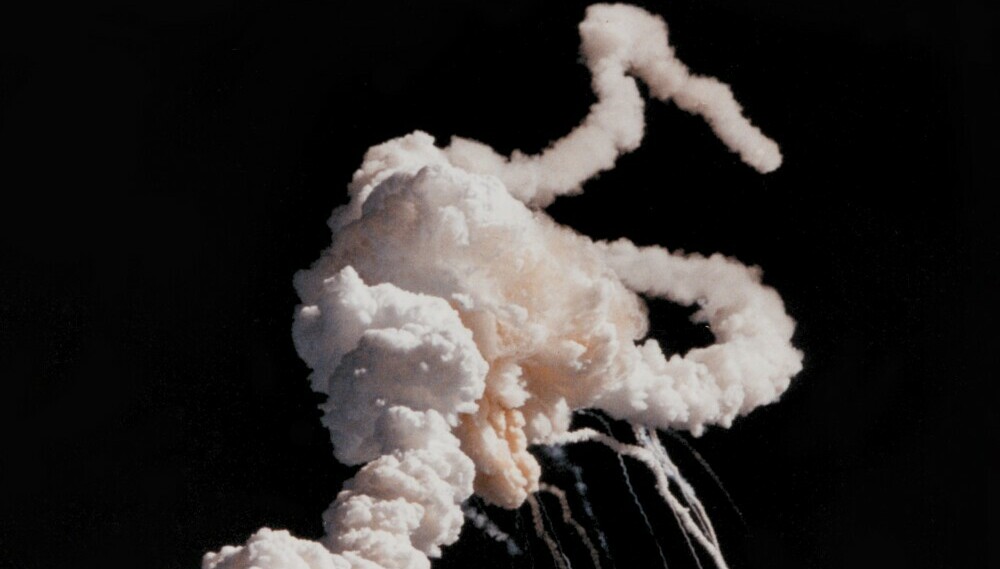
The world watched in collective shock as the events unfolded on live television. Schools across the US had tuned in to see Christa McAuliffe, the first teacher in space, only to witness a devastating tragedy. The emotional toll was immense, and the incident etched itself into the public consciousness.
Investigations into the disaster revealed that the failure of an O-ring seal in the shuttle’s right solid rocket booster was to blame. In the face of freezing temperatures on the morning of the launch, the O-ring failed to seal properly, allowing hot combustion gases to escape and lead to the catastrophic explosion.
NASA’s management faced tough scrutiny. The Rogers Commission Report, completed and submitted to the President in early June, highlighted organizational flaws and decision-making processes that failed to address the potential risk related to the O-rings in cold weather conditions. Ultimately, the O-rings had a design flaw that had not been addressed. NASA faced a profound period of re-evaluation, placing the space shuttle program on a two-year hiatus.
Memorials were held throughout the US to honour the Challenger crew: Dick Scobee, Michael J. Smith, Ronald McNair, Ellison Onizuka, Judith Resnik, Gregory Jarvis, and Christa McAuliffe. Their legacy underscored the importance of safety in the continued pursuit of space exploration. The impact of the disaster rippled through US society, prompting significant reforms in both NASA operations and U.S. space policy.
Confrontations and Conflicts: US Foreign Policy in 1986
In 1986, US foreign policy was characterized by confrontations and conflicts that played out on the international stage, impacting global politics and testing the mettle of American diplomacy. Highlighting this turbulent period, the Iran-Contra affair emerged as a contentious issue that compromised US credibility and raised questions about the extent of executive power.
The core of the Iran-Contra scandal was the secret and illegal sale of arms to Iran by senior US officials. The funds received were then diverted to support Contra rebels in Nicaragua, amidst a congressional ban on such aid. This intricate web of deception began to unravel following a leak by Mehdi Hashemi, a senior official in the Iranian Islamic Revolutionary Guard Corps, to the Lebanese magazine Al-Shiraa.
The magazine’s publication of the story, on 3 November, shook the Reagan administration and led to multiple investigations, indictments, and a lasting debate on constitutional checks and balances.
This only added to the strife caused by the US military action against Libya on 15 April. Known as Operation El Dorado Canyon, it had been ordered by President Reagan, citing evidence of Libyan involvement in international terrorism, such as a Berlin discotheque bombing that had killed American soldiers. The operation, which bombed targets in Tripoli and Benghazi, intensified debates over the use of force in foreign policy and highlighted the tensions inherent in the US’s role on the global stage.
These foreign policy ventures reflect a period defined by Cold War anxieties and strategic manoeuvring, where US actions were often seen as barometers for East-West relations. Despite being caught in ethical and legal turmoil, the United States’ attitudes towards Iran and Nicaragua and the military interventions in Libya were perceived as hardline approaches within the broader context of an ideological showdown with the Soviet Union. In the very earliest days of the new Soviet regime of Mikhail Gorbachev, the USSR was still seen by the US as meddling in many of the world’s potential hotspots.
As the year unfolded and these issues doppler through news cycles, a backdrop of intensifying diplomacy started to feature prominently. Foremost among the diplomatic advances was the marked improvement in US-Soviet relations, leading to the pivotal summit in the Icelandic capital of Reykjavik.
A Thaw in the Cold War: The US-Soviet Summit
After years of tension and an escalating arms race, 1986 marked a turning point in the fraught relationship between the United States and the Soviet Union. It was the year that saw the ice of the Cold War begin to crack, as two world leaders came together seeking common ground.
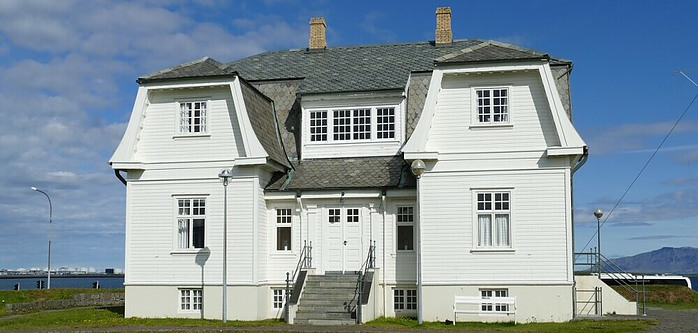
The anticipation leading up to the Reykjavik summit on 11 – 12 October, where President Ronald Reagan welcomed the General Secretary of the Communist Party, Mikhail Gorbachev, was palpable. This was more than a formal handshake; it was a symbol of changed attitudes and the potential for peace. They discussed crucial topics such as arms control and human rights, and while not all differences were resolved, the talks were a breath of fresh air in the stifling Cold War atmosphere.
The summit’s outcomes included agreements on weapons reductions, with a particular focus on limiting nuclear arsenals. These breakthroughs didn’t erase the contention, but they generated momentum for further negotiations and brought a sense of relief to nations on both sides of the Iron Curtain.
Back in the US, reactions were mixed. Some saw the summit as a beacon of hope, while others remained sceptical of the Soviet Union’s intentions. Nonetheless, it was clear that this was a stride toward easing global tensions and promoting diplomacy over conflict.
The Reykjavik summit set the stage for subsequent meetings and, importantly, laid the groundwork for significant treaties to come. It proved that dialogue was possible and that even the most entrenched conflicts could be approached through diplomatic channels. This spirit of reducing hostilities carried into other global arenas, as seen in the ensuing events of the year.
Navigating Change: Reflections on the Global Landscape of 1986
Amidst a multitude of significant occurrences in 1986, three events stood out. Two for their political resonance and the other for its human cost: Ferdinand Marcos fled the Philippines, Swedish Prime Minister Olof Palme was assassinated, and journalist John McCarthy was abducted by Islamic Jihad on 17 April in Beirut. This was just 6 days after the same group had taken Irishman Brian Keenan. The pair were to spend much of their time in incarceration together.
The People Power Revolution in the Philippines, an inspiring testament to the force of collective will, showcased the power of nonviolent resistance. The expulsion of Marcos and his wife, who became a byword for decadence, heralded a new chapter for the Filipino people, symbolizing hope and renewal for nations under dictatorial rule.
Olof Palme’s assassination at 11:21 in the evening has been suggested to have been the work of Apartheid-era South Africa, although it has not been definitively proved. Short in the back with a single bullet, Palme was walking home without his security detail together with his wife, Lisbet, after having been to the cinema in central Stockholm.
Conversely, having been ordered to leave Beirut by his employer, John McCarthy was kidnapped despite having an armed guard escorting him to the airport. The event highlighted the perils faced by journalists and the often-unseen costs of conflict. His captivity, which was to last for a total of 1,943 days, serves as a grave reminder that the pursuit of truth can come at a high price, and the protection of press freedom remains a critical issue even today.
The events of 1986, charged with political significance, also brought forward the shared values of humanity: courage in the face of disaster, the quest for justice, and the enduring strength of the human spirit. Reflecting on these moments from the past, enables us to increase our understanding of the world and, hopefully, inspire actions toward a more secure and equitable future.
Maradona’s Hand of God
Yes, I know I said I wouldn’t mention it, but I can’t let it pass without acknowledgement. And that second goal was a thing of sublime beauty.
Deaths
January
4 January – Christopher Isherwood, English writer (b. 1904)
4 January – Phil Lynott, Irish musician, lead singing bassist of the Irish rock band Thin Lizzy (b. 1949)
7 January – Juan Rulfo, Mexican writer (b. 1917)
10 January – Jaroslav Seifert, Czech writer, Nobel Prize laureate (b. 1901)
24 January – L. Ron Hubbard, American writer, and founder of Scientology (b. 1911)
27 January – Nikhil Banerjee, Indian classical sitarist (b. 1931)
28 January – In the Space Shuttle Challenger disaster:
Gregory Jarvis, American astronaut (b. 1944)
Christa McAuliffe, American astronaut, and teacher (b. 1948)
Ronald McNair, American astronaut (b. 1950)
Ellison Onizuka, American astronaut (b. 1946)
Judith Resnik, American astronaut (b. 1949)
Dick Scobee, American astronaut (b. 1939)
Michael J. Smith, American astronaut (b. 1945)
February
1 February – Alva Myrdal, Swedish politician, diplomat, and writer, recipient of the Nobel Peace Prize (b. 1902)
1 February – Ida Rhodes, American mathematician, pioneer in computer programming (b. 1900)
7 February – Minoru Yamasaki, Japanese architect, designed the twin towers of the World Trade Center (b. 1912)
24 February – Tommy Douglas, Canadian politician and “Father of Medicare” in Canada (b. 1904)
28 February – Olof Palme, Swedish politician, 26th Prime Minister of Sweden. Assassinated (b. 1927)
March
10 March – Ray Milland, Welsh American actor, and director (b. 1907)
13 March – Eugen Gerstenmaier, German politician, 20 July Plotter (b. 1906)
22 March – Martin Harlinghausen, German air force general (b. 1902)
30 March – James Cagney, American actor, and dancer. Possibly his most famous roles were those of Cody Jarrett in the 1949 film White Heat and of Martin “Moe the Gimp” Snyder opposite Doris Day in 1955’s Love Me or Leave Me (b. 1899)
April
7 April – Leonid Kantorovich, Russian economist, Nobel Prize laureate (b. 1912)
14 April – Simone de Beauvoir, French feminist writer (b. 1908)
17 April – Marcel Dassault, French aircraft industrialist (b. 1892)
20 April – Aleksei Arbuzov, Soviet playwright (b. 1908)
23 April – Jim Laker, English cricketer, and commentator. Most famous for taking 19 wickets (from a total of 20) in the Test match between England and Australia at Old Trafford, Manchester in 1956 (b. 1922)
24 April – The Duchess of Windsor. Born Bessie Wallis Warfield in 1896, the intention of King Edward VIII to marry her in 1936 led to his abdication which averted a constitutional crisis.
26 April – Valery Khodemchuk, Soviet engineer, working at Chernobyl reactor 4 (b. 1951)
May
3 May – Robert Alda, American actor, and father of M*A*S*H star, Alan Alda (b. 1914)
8 May – Tenzing Norgay, Nepalese sherpa. Famous for being one of the first two men (with Edmund Hillary) to reach the summit of Mount Everest in 1953. (b. 1914)
11 May – Vladimir Pravik, Soviet firefighter (b. 1962)
11 May – Aleksandr Akimov, Soviet engineer who was the shift supervisor during the events of the Chernobyl disaster (b. 1953)
12 May – Alicia Moreau de Justo, Argentine physician, politician, pacifist, and human rights activist (b. 1885)
13 May – Vasily Ignatenko, Soviet firefighter who responded to the Chernobyl disaster (b. 1961)
June
3 June – Dame Anna Neagle, English actress (b. 1904)
13 June – Benny Goodman, American jazz musician (b. 1909)
14 June – Jorge Luis Borges, Argentine writer (b. 1899)
26 June – Kunio Maekawa, Japanese architect (b. 1905)
July
July 4 – Oscar Zariski, Russian mathematician (b. 1899)
July 6 – Jagjivan Ram, Indian politician (b. 1908)
18 July – Stanley Rous, English football referee, and administrator. He served as the sixth President of FIFA from 1961 to 1974 (b. 1895)
19 July – Alfredo Binda, Italian cyclist (b. 1902)
22 July – Floyd Gottfredson, American cartoonist (b. 1905)
25 July – Vincente Minnelli, American film director (b. 1903)
31 July – Chiune Sugihara, Japanese diplomat and humanitarian who saved Jewish WWII refugees (b. 1900)
August
18 August – Harun Babunagari, Bangladeshi Islamic scholar, and educationist (b. 1902)
19 August – Hermione Baddeley, British actress (b. 1906)
22 August – Celâl Bayar, Turkish politician, 3rd Prime Minister of Turkey and President of Turkey (b. 1883)
23 August – Mikhail Kuznetsov, Soviet actor (b. 1918)
27 August – George Nēpia, New Zealand Māori rugby player (b. 1905)
31 August – Henry Moore, British sculptor (b. 1898)
September
18 September – Pat Phoenix, English actress famous for her portrayal of Elsie Tanner in Coronation Street (b. 1923)
25 September – Nikolay Semyonov, Russian chemist, Nobel Prize laureate (b. 1896)
27 September – Cliff Burton, American musician, and songwriter (b. 1962)
October
5 October – Hal B. Wallis, American film producer (b. 1898)
5 October – James H. Wilkinson, British mathematician (b. 1919)
28 October – Ian Marter, English actor, and writer in the long-running BBC series Doctor Who (b. OTD 1944)
31 October – Robert S. Mulliken, American physicist and chemist, recipient of the Nobel Prize in Chemistry (b. 1896)
November
8 November – Artur London, Czech statesman (b. 1915)
8 November – Vyacheslav Molotov, Soviet politician (b. 1890)
16 November – Siobhán McKenna, Irish actress (b. 1923)
22 November – Scatman Crothers, American actor, and musician. Amongst other roles, Crothers played the role of Dick Hallorann in Stanley Kubrick’s 1980 adaptation of Stephen King’s novel The Shining and as the voice of Hong Kong Phooey. (b. 1910)
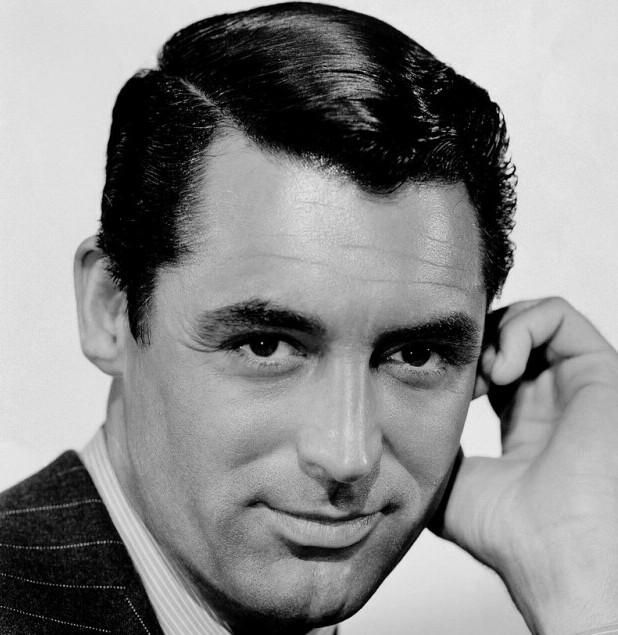
29 November – Cary Grant, English actor. Born Archibald Leach, in Bristol, on 18 January 1904, Grant starred in many Hollywood films and is perhaps best remembered for his work with director Alfred Hitchcock.
December
8 December – Anatoly Marchenko, Soviet dissident, and author. Marchenko died as a result of his having been on hunger strike since 4 August 1986. His death was a factor in Mikhail Gorbachev’s 1987 decision to sanction the mass release of political prisoners (b. 1938)
13 December – Heather Angel, British-American actress (b. 1909)
13 December – Ella Baker, American civil rights activist (b. 1903)
17 December – Wanis al-Qaddafi, Libyan politician, 10th Prime Minister of Libya (b. 1924)
21 December – Willy Coppens, Belgian pilot (b. 1892)
29 December – Harold Macmillan, Prime Minister of the United Kingdom (b. 1894)