
1987 was another year of significant events. Some, perhaps, went unremarked at the time but would have seismic consequences. For example, 1987 was an important year for global politics, and perhaps the player of greatest importance in that arena was Mikhail Gorbachev.
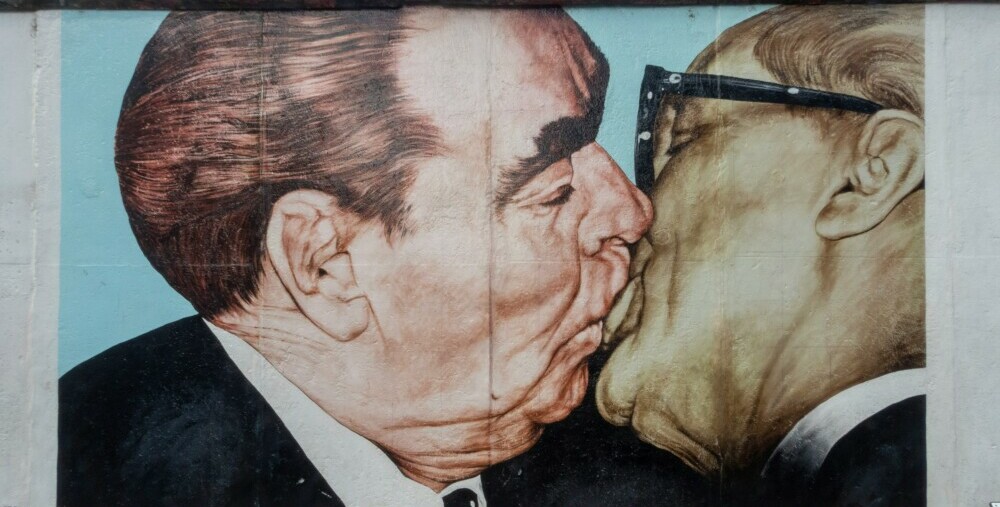
His role as the leader of the Soviet Union and the radical reforms he implemented ultimately reshaped the Cold War landscape and brought its end, with the collapse of the Communist order in Eastern Europe and the dissolution of the USSR.
To truly understand the gravity of the changes, it’s crucial to grasp the concepts of two Russian words: Glasnost and thought. On the face of it, these words were just buzzwords, but their deeper meanings, as translated into Soviet policy were a death knell for the status quo. In essence, Glasnost translates to ‘openness,’ aimed at fostering a transparent government, while Perestroika means ‘restructuring,’ designed to overhaul the Soviet economic and political systems.
The effects of these policies were profound, both internally within the Soviet Union and externally, in waves which rippled across Eastern Europe. Both Soviet and other Eastern European citizens experienced unprecedented freedom of expression, leading to a surge of political discourse and dissent previously unimaginable under the previously rigidly controlled regimes.
Internationally, following on from the success of their 1986 meeting in Reykjavik, there was another US / Soviet Summit, this time held in Washington D.C. It was no diplomatic courtesy call; it was a tangible sign of thawing relations between the two superpowers, a scenario many had despaired of ever witnessing.
As Gorbachev’s reforms gained momentum, the Cold War’s icy grip began to loosen, suggesting a future where constructive dialogue would replace confrontational posturing. However, with change came volatility; 1987 was marred by violent eruptions around the world.
In the Middle East, this volatility was vividly illustrated by the tragic missile attack on the USS Stark and the deadly riots at the Hajj pilgrimage in Mecca. The following section will delve into the details of these events and their broader implications for the Middle East and international relations.
Turbulence in the Middle East: The USS Stark Incident and the Hajj Riot
1987 was a year marked by significant strife and political tension, a truth deeply reflected in events within the Middle East. Chief among these was the attack on the USS Stark. On May 17, the American frigate was struck by two Exocet missiles fired from an Iraqi jet. The incident resulted in the loss of 37 sailors and escalated tensions in a region already fraught with conflict.
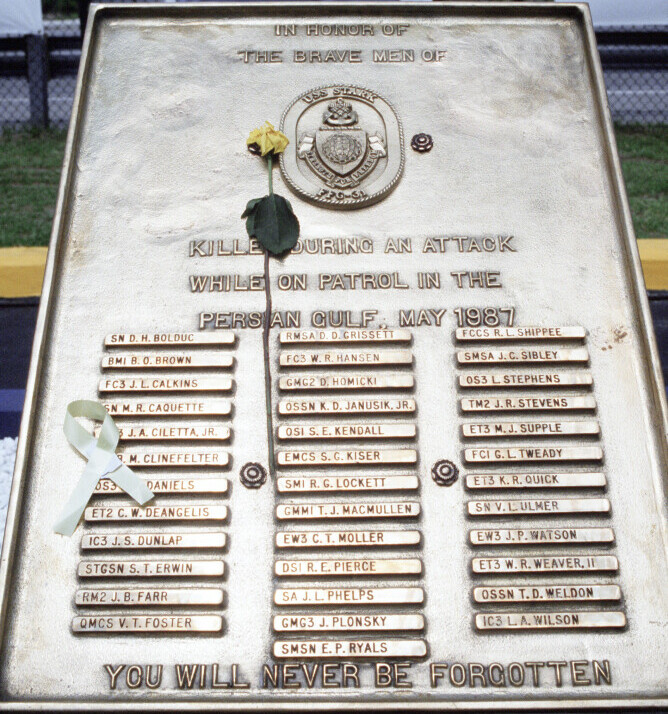
A thorough investigation revealed the attack was most likely a mistake – the pilot claimed that he had thought the Stark was an Iranian tanker – but the repercussions resonated strongly, with the US wrestling over how to respond to an ally’s error that cost American lives. The Stark’s captain, Glenn R. Brindel was reprimanded for his conduct and ultimately retired early from the US Navy.
The reverberations of the USS Stark incident were felt across the globe, marking a turning point in United States policy in the Gulf. It prompted critical examinations of US engagement strategies in the region and reinforced the need for tighter operational protocols to prevent such incidents. Relations with Iraq underwent scrutiny as the US deliberated on measures that could foster accountability, without further destabilizing the region’s delicate political balance.
In the same year, the Hajj pilgrimage ended in bloodshed, when a protest by Iranian pilgrims against Israel and the US escalated into a confrontation with Saudi Arabian security forces. The resulting riot on July 31 led to more than 400 hundred and many thousands of injuries. This tragic event underscored the deep religious and political rifts in the region, further intensifying the hostility between Shiite Iran and Sunni-dominated Saudi Arabia.
The clash at the Hajj had far-reaching implications. It triggered a series of diplomatic crises and spawned a battle for influence over the Muslim world. With Saudi Arabia’s reputation as a guardian of Islamic holy sites called into question, the kingdom faced challenges to its authority and needed to reaffirm its position within the Islamic community.
These disturbances set a grim tone for the challenges that lay ahead, challenges that led to Palestinians in the occupied territories revolting against Israeli rule in late 1987. The simmering tensions in the region would come to a head, giving rise to the Palestinian Intifada. As the story unfolds, it becomes clear that the battles fought are not just over land, but for the hearts and identities of the people entangled in these enduring conflicts.
Uprising and Conflict: The Palestinian Intifada and the Sri Lankan Civil War
The year 1987 marked a period of intense upheaval in various regions around the world, two of which were the Palestinian territories and Sri Lanka. In the former, what began as a spontaneous uprising soon escalated into a defining struggle known as the Intifada. Palestinians, under long-standing Israeli occupation, found themselves grappling with social, political, and economic deprivations.
It started in Jabalia refugee camp, Gaza on 9 December after the collision between an Israeli truck and a civilian car carrying Palestinian workers from the camp. It quickly spiralled into widespread civil disobedience, protests, and a confrontation that would last for years, profoundly shifting the Israeli-Palestinian narrative.
This grassroots movement saw ordinary Palestinians, including children and women, throwing stones and Molotov cocktails at Israeli forces, and challenging the status quo. The enduring images of these clashes and the civil society’s resilience were crucial in drawing global attention to their plight and shaping international discourse on their right to self-determination.
Simultaneously, an island nation was facing its own turmoil. Sri Lanka, in its attempt to quell the armed insurgency led by the Liberation Tigers of Tamil Eelam (LTTE), known as the Tamil Tigers, found 1987 a particularly brutal year. The Tamil Tigers had been formed to fight for an independent Tamil state in the north and east of Sri Lanka in 1976. This was in response to continuous discrimination and violent persecution against Sri Lankan Tamils by the Sinhalese-dominated Sri Lankan Government since independence from Britain in 1948. Prior to independence, the minority Tamils had held the dominant position in Sri Lankan public life due in part to their more ready acceptance of Christianity and the English Language.
In response to the Indo-Sri Lankan Accord of July 1987, which they had not been a party to, the Tamil Tigers intensified their campaign against the Sri Lankan government, leading to
bloodshed as the conflict took on an increasingly ethnic dimension, setting the stage for what would become a protracted and devastating civil war. The Tamil Tigers, well organized and unwavering in their cause, launched attacks that would lead to a heavy-handed response by the Sri Lankan military. As the year progressed, tales of tragedy and despair emerged from the island, capturing the world’s attention and urging international bodies to call for restraint and dialogue.
Shifts in Global Politics: Thatcher’s Triumph and Military Movements in Asia
Margaret Thatcher’s third election victory in June 1987 wasn’t just another win for the Iron Lady; it underscored a decisive endorsement of her policies and leadership style that had a profound effect on the UK’s trajectory. Her government’s neoliberal economic policies, stance on the Cold War, and domestic reforms set the stage for the country’s direction in the late 20th century.
The events in Chad, though often overshadowed by other global incidents, were significant for the illustration of regional power dynamics in Africa. Since Libyan forces had invaded in 1978, a curious state of almost civil war had existed in Chad. Forces loyal to the Chadian government were backed by the French whilst Chadian rebels were supported by Colonel Muammar Gaddafi’s Libya, in the form of air power, armour and artillery.
The successful expulsion of Libyan forces from Chad resulted from a rapprochement between the various Chadian groups and the supply by Zaïre, France, and the US of anti-tank and surface-to-air missiles. Thus, the strategic advantage of the Libyans was lost. At a stroke, Chad’s national sovereignty was enhanced, and the world witnessed a shift in influence away from Gaddafi’s regime amidst tense international scrutiny.
Conflict between India and Pakistan had been a constant feature since the two countries’ births in 1947 following independence from Britain. In the disputed Kashmir region, in June 1987, the Pakistan Army attempted to seize heights overlooking the passes in the Siachen Glacier region. The Indian Army resisted, launching successful strikes on Pakistani positions. In September the Pakistan Army attempted to retake those positions. The Indian Army resisted this attempt.
Each of these situations, though varying in scale and impact, contributed to the intricate tapestry of global politics in 1987. They exemplified the tension, transition, and transformation that characterized the closing years of the Cold War era. The resilience of Thatcher, the rebalancing of powers in Chad, and the ongoing saga between India and Pakistan collectively represent the convergence of political will, strategic interest, and the pursuit of sovereignty that helped shape the world as we know it today.
Deaths
January
5 January – Herman Smith-Johannsen, Norwegian supercentenarian (b. 1875)
February
2 February – Alistair MacLean, British novelist (b. 1922)
3 February – Nobuhito, Prince Takamatsu, younger brother of Japanese Emperor Hirohito (b. 1905)
4 February – Liberace, American pianist, singer and actor (b. 1919)
5 February – Otto Wöhler, German general, serving during World War I and World War II (b. 1894)
11 February – Mark Ashton, Irish gay rights activist (b. 1960)
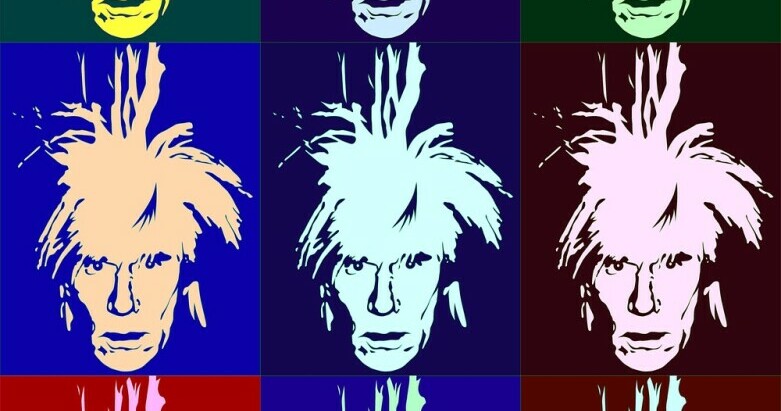
22 February – Andy Warhol, American artist, director, writer (b. 1928)
March
1 March – Freddie Green, American swing jazz guitarist (b. 1911)
2 March – Randolph Scott, American actor (b. 1898)
3 March – Danny Kaye, American singer, actor, and comedian (b. 1911)
28 March – Maria von Trapp, Austrian singer. Famously portrayed by Julie Andrews in the film The Sound Of Music (b. 1905)
28 March – Patrick Troughton, English actor. Most famous for his portrayal as the second incarnation of Dr. Who following on from William Hartnell (b. 1920)
April
2 April – Buddy Rich, American jazz drummer (b. 1917)
11 April – Primo Levi, Italian chemist and writer (b. 1919)
17 April – Carlton Barrett, Jamaican reggae drummer (b. 1950)
May
2 May – Karl Davis, African American fashion designer (b. 1962)
6 May – William J. Casey, American Central Intelligence Agency director (b. 1913)
7 May – Colin Blakely, Northern Irish actor (b. 1930)
14 May – Rita Hayworth, American actress and dancer (b. 1918)
24 May – Hermione Gingold, English actress (b. 1897)
29 May – Charan Singh, 5th Prime Minister of India (b. 1902)
June
1 June – Errol Barrow, Caribbean statesman, 1st Prime Minister of Barbados (b. 1920)
10 June – Elizabeth Hartman, American actress (b. 1943)
22 June – Fred Astaire, American actor, singer, and dancer (b. 1899)
24 June – Jackie Gleason, American actor, and comedian (b. 1916)
July
17 August – Rudolf Hess, German Nazi official. In 1941, Hess flew to Scotland, in an attempt to negotiate Britain’s exit from WWII. Hess was arrested and held in the Tower of London, Mytchett Place, Surrey, and Maindiff Court Hospital in South Wales before being tried at the Nuremberg war crimes trials. He was found guilty of crimes against peace (planning and preparing a war of aggression), and conspiracy with other German leaders to commit crimes. He was still serving his life sentence at Spandau prison in West Berlin when he died (b. 1894)
29 August – Lee Marvin, American actor (b. 1924)
September
1 September – Gerhard Fieseler, German World War I flying ace, aerobatics champion, and aircraft designer and manufacturer (b. 1896)
2 September – Alfredo Oscar Saint Jean, President of Argentina (1982) (b. 1926)
9 September – Bill Fraser, Scottish actor (b. 1908)
11 September – Peter Tosh, Jamaican singer, and musician. Famous for being, along with Bunny Wailer and Bob Marley, a found of the reggae group The Wailers (b. 1944)
11 September – Lorne Greene, Canadian actor, radio personality and singer (b. 1915)
25 September – Emlyn Williams, Welsh writer, dramatist, and actor (b. 1905)
29 September – Henry Ford II, president of Ford Motor Company (b. 1917)
October
2 October – Sir Peter Medawar, Brazilian-British scientist, recipient of the Nobel Prize in Physiology or Medicine (b. 1915)
3 October – Catherine Bramwell-Booth, English Salvation Army officer (b. 1883)
13 October – Kishore Kumar, Indian actor and playback singer (b. 1929)
15 October – Thomas Sankara, Burkinabe politician, 5th Prime Minister of Burkina Faso and 2nd President of Burkina Faso (b. 1949)
19 October – Jacqueline du Pré, British cellist (b. 1945)
20 October – Andrey Kolmogorov, Russian mathematician (b. 1903)
27 October – Vijay Merchant, Indian cricketer (b. 1911)
28 October – André Masson, French artist (b. 1896)
November
18 November – Jacques Anquetil, French road racing cyclist (b. 1934)
December
1 December – James Baldwin, African American novelist, essayist, playwright and poet (b. 1924)
21 December – Ralph Nelson, American film and television director, producer, writer, and actor (b. 1916)
22 December – Alice Terry, American actress (b. 1899)
24 December – M. G. Ramachandran, Indian actor, and Chief Minister of Tamil Nadu (1977–1987) (b. 1917)
27 December – Anna Eliza Williams, British supercentenarian, and the oldest person in the world (b. 1873)