
Like other years in the eighties, 1989 in the UK was a unique year for music. Continuing change and innovation saw more blending of genres and evolution. Here are the singles I bought and a brief discussion of the top sellers in the UK singles chart, 1989.
This was the tail end of my vinyl single-buying career, as I became more selective in what singles I bought and started to buy more albums. Because, let’s face it, I was getting old and the pop charts didn’t hold the same allure for me.
Let us be under no illusion. There was production line dross and rank-lazy rehashing of classics from days gone. But never mind that, new talent did come through. We also had solid hits from established artists.
Moving away from Radio 1 would yield a mix of everything from dance tracks to soulful ballads. CDs were on the rise and becoming more popular – for both singles and albums. So, although the humble 7-inch single still held a special place in the hearts of music fans, alternatives were appearing.

As we moved into the digital age, an interesting point cropped up. The music industry saw no need to tamper with an important distinction. That is the one between 45 rpm vinyl (singles), and 33⅓ rpm vinyl (albums).
CDs could hold around 80 minutes of music. Compared with a standard 12-inch 33⅓ rpm record, this is almost double with just 22 minutes per side. This limit of 22 minutes was not the hindrance that some might think.
This imposed constraint lent itself to innovation. Artists would structure albums creatively, with a clear division between side A and side B. This could be thematic or stylistic. A natural break in the listening experience was afforded, which allowed for a pause or shift in mood.
Vinyl records and CDs differ significantly in audio quality as well as music capacity. The analogue grooves of a vinyl record yield a warm, rich sound. However, they have a lower dynamic range (55-70 dB) and signal-to-noise ratio. Vinyl degrades over time due to wear and environmental factors.
In contrast, CDs offered a clean, precise digital sound. They had a higher dynamic range (around 96 dB) and signal-to-noise ratio (about 90 dB). Their sound quality was also maintained without degradation from repeated play.
Counterintuitive as it sounds, record companies would utilise CD technology to offer CD albums and CD singles. In the same way that a 12-inch single could offer additional tracks to a 7-inch, CDs could do the same. A big selling point of CDs was better sound quality.
The 5 Top-Selling Singles of 1989
1989 in the UK was undeniably dynamic, and the top-selling singles reflect that wonderfully chaotic energy. Here’s a look at the five best notable singles of the year. In their way, each contributed to the soundtrack of that transformative period.
Ride On Time by Black Box
This was an absolute beast of a hit single. Dominating the charts for weeks – it was number one for 6 weeks – this track was everywhere you turned. Its infectious energy made it a dancefloor anthem and cemented its place in the annals of dance music history.
It did us all a favour when it displaced the second-best-selling single from the number one spot. Unfortunately, it too was elbowed out of the way by the follow-up to Swing The Mood.
That said, Ride On Time had controversies of its own. Such as Black Box’s initial use of a sample from Loleatta Holloway’s 1980 performance of Love Sensation without permission. This led to a legal claim from the song’s writer Dan Hartman and a simmering resentment from Holloway. The vocals were re-recorded by a then-unknown singer by the name of Heather Small. This led in turn to its own controversy.
Swing The Mood by Jive Bunny & The Mastermixers
Oh, good grief. This was lazy, knob-twiddling of the worst kind. My stated position about two types of music needs stretching to fit a third category. That is, “completely sampled trash like this,” with the exhortation, “Just shh!”

It’s an example of what happens when novelty acts get a bit more success than they deserve. The mashup of old rock and roll hits might have caught the public’s attention, but let’s be honest – it was barely more than recycled fluff.
Eternal Flame by The Bangles
On the other hand, this was another great piece of work by the ladies from Los Angeles. It brought a touch of soulful pop to the year’s top tracks. After the relative failure of In Your Room, Eternal Flame rose up the UK singles chart. It reached number one in April 1989. It spent a total of 4 weeks there. This may have been in response to the Hillsborough disaster, which occurred on the day it reached number one.
This ballad showcased the enduring appeal of well-crafted pop songs. It was another collaboration between Susanna Hoffs, Tom Kelly and Billy Steinberg. It became an instant classic. It’s one of those songs that still gets into people’s heads decades later.
Too Many Broken Hearts by Jason Donovan
Here we are, more unadulterated dross. It lacked depth and originality, yet somehow, somehow, it found its way into many record collections. Enough said.
Soul II Soul featuring Caron Wheeler – Back To Life (However Do You Want Me)
Oh my, this was a strong track. I’d go as far as to say it’s genre-defining. Fusing R&B, soul, and dance, it was a huge hit. It spent 4 weeks at number one in June and July. This was a game-changer. It embodied the shift towards more eclectic and innovative sounds that would continue into the nineties.
Supposedly driven by a near-death experience undergone by Caron Wheeler, it takes the form of a conversation between her and her creator. “Why do you want me here? However do you want me?”
Personal Picks of 1989
In 1989, the number of additions to my 7-inch single collection was very limited. I’m not sure of the exact reason, but I know that I spent a great deal more time in the pub. Also, I spent more on buying albums. I was now a fully-fledged university student. I moved in different circles. Some of the more questionable singles purchases of previous years were not happening.
Then there was the fact that the singles chart was, overall, not to my taste. Top Of The Pops was less of a draw for me. In general, although this year the better selling singles were generally better than last year, I was not moved to buy them.
I want to think, therefore, that the singles that I bought were top-notch. These extra-special buys are as follows.
Beautiful South – You Keep It All In
This track was a gem. It’s that perfect blend of witty lyrics and catchy tunes that get stuck in your head. The Beautiful South continued the work of The Housemartins. They had the fantastic knack for delivering sharp social commentary. All wrapped in enjoyable pop music.
Creeping in as an 80’s single, You Keep It All in was released in September 1989 and was the band’s second single after the delicious Song For Whoever. It rose to its highest chart position of number 8 in the first week of October. It had a run of 8 weeks in the chart, of which 3 were in the top 10.
It was backed by the curiously titled, I Love You (But You’re Boring). Both tracks feature on the band’s debut album Welcome To The Beautiful South. A sister track to I Love You… called I Hate You (But You’re Interesting), was included on the subsequent album, Choke.
The Beautiful South’s MO was a curious mixture of sweet melodies overlaid on some quite dark themes. This was highlighted by the album’s original front cover, a woman with a gun in her mouth and a man sparking up a cigarette. For example, Woolworths (remember them), refused to stock the album because of the artwork. A more palatable alternative was created.
Back to the single. By my reckoning, it’s a lament about violence by men. Various images are conjured. There’s a scared girl sleeping alone with the light on as hears her dad ‘getting ready to fight’. But who is he set on violence towards? His wife, ‘when all I wanted to do was knife you in the heart,’ or is he going out to commit some crime of violence? Very ambiguous; very clever.
Now, we segue into U2, who are name-checked on The Beautiful South’s track I Think The Answer’s Yes from Choke. And by name-checked, I mean slagged off. The track is about the abuse of the British political system and the crushing of the working class. U2 (and Simple Minds) are not spared.
U2 and B.B. King – When Love Comes To Town
When Love Comes To Town was written for and featured the legendary B.B. King. This collaboration was pure magic. It seamlessly merged rock and blues in a way that was both fresh and nostalgic.
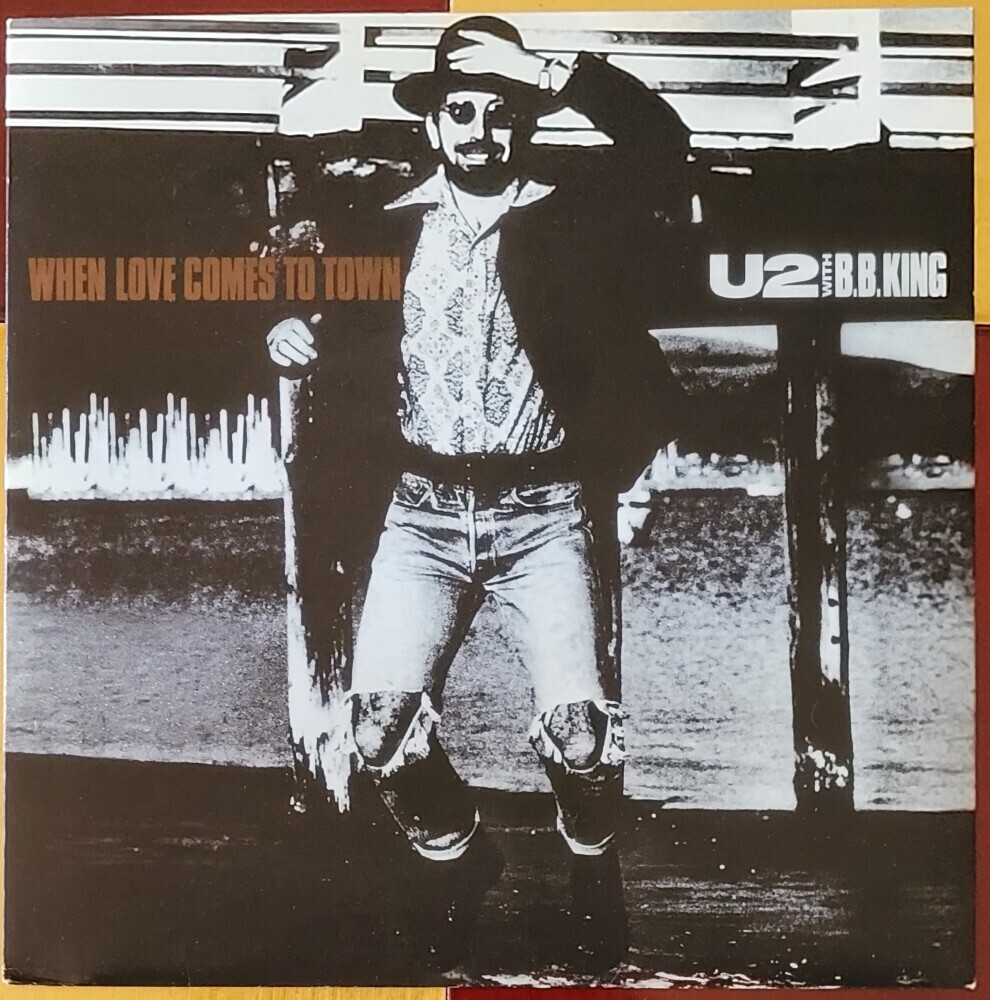
Listed as the twelfth track on Rattle and Hum, this was the third single released from the album. 1988’s Desire and Angel Of Harlem preceded it, and All I Want Is You came later in 1989.
The track was recorded at the seminal Sun Studios in Memphis. Already established as global superstars, it had little effect on U2’s popularity. However, it propelled BB King to a level of stardom that he had never previously enjoyed, certainly at a sustained high level.
Although prolific, his 1970 single, The Thrill Is Gone was perhaps his best-known work. This reached number 15 on the Billboard Hot 100 and earned King the Grammy for Best Male R&B Vocal Performance in the following year’s awards.
When Love Comes To Town enjoyed a 7-week run in the UK singles chart, peaking at number 6 in April 1989.
In addition to those two 7-inch singles, I also treated myself to a couple of 12-inch singles.
U2 – All I Want Is You
I bought this from Woolworths as a box set on 16 June 1989 for the sum of £3.29. Included with the 12-inch single were four black and white prints – one of each band member. Taken by Anton Corbijn, apart from The Edge’s, they are the images used for each of the four singles from Rattle and Hum.
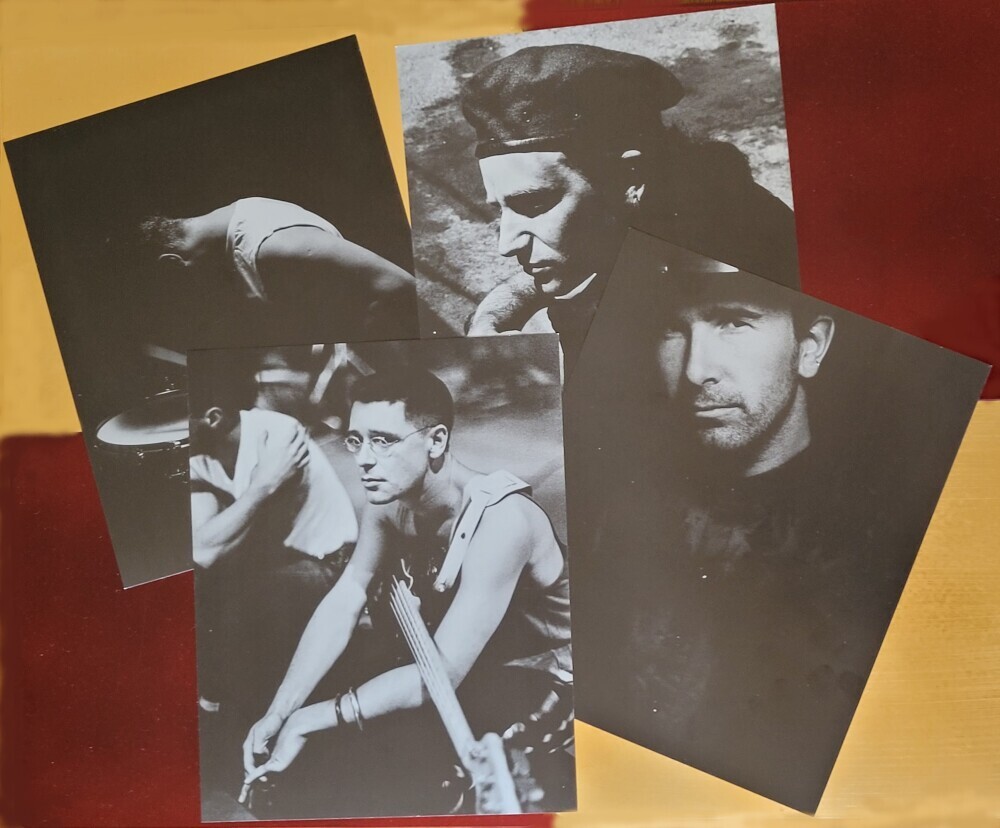
Adam Clayton features on Desire; Larry Mullen Jr. on Angle Of Harlem; The Edge on When Love Comes To Town and Bono on this track.
All I Want Is You reached number 4 in the UK singles chart. This meant that all four singles from Rattle And Hum reached the UK top ten. It’s known for its emotional depth and orchestral arrangement. One of the standout tracks from the album, it remains a staple in their live performances.
This song is a poignant ballad with a sweeping, orchestral arrangement. It starts with a gentle acoustic guitar and gradually builds to a dramatic climax, featuring a lush string section. All overlaid by Bono’s emotive/overblown* vocals. The song’s heartfelt lyrics and expansive sound give it an epic, cinematic quality. Its universal theme of love and yearning continues to connect with audiences. It is one of U2’s most memorable love songs.
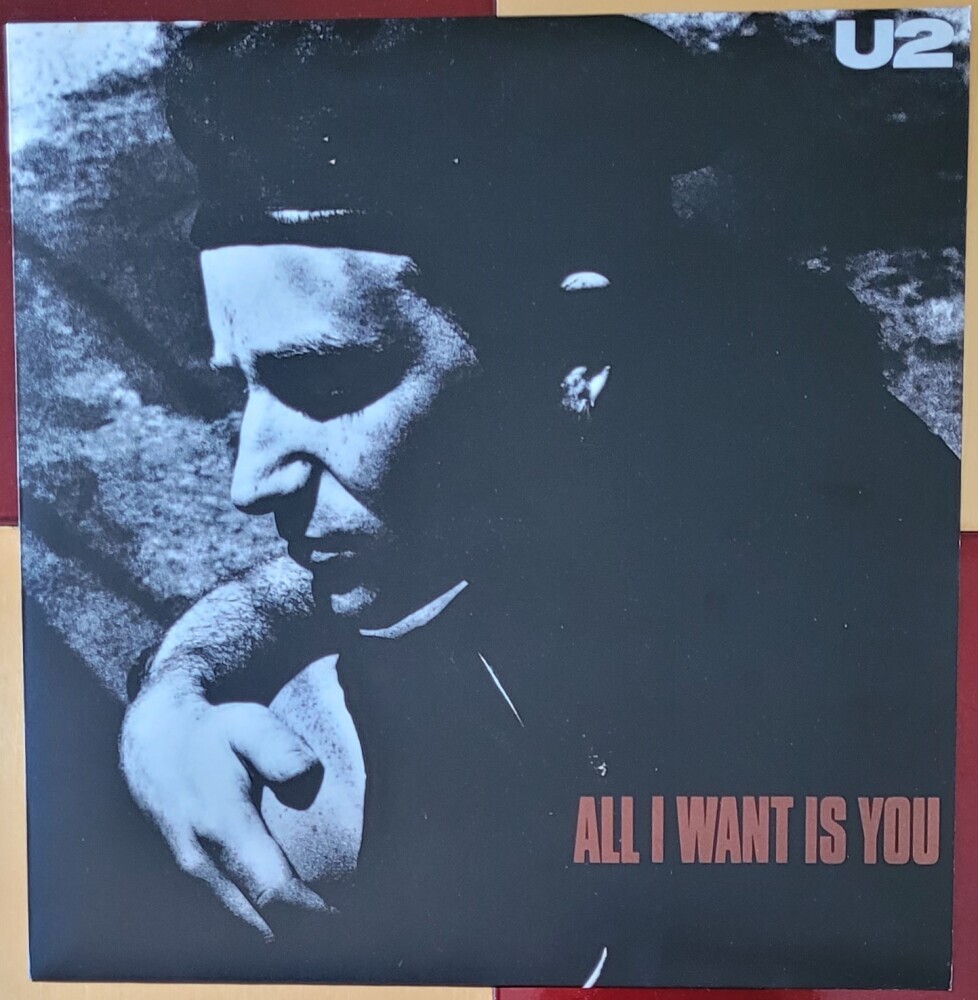
The single contains three tracks. There is the title track, plus a cover of Alex North and Hy Zaret’s Unchained Melody. Of course, this was made most famous by The Righteous Brothers.
Also included is Ever Lasting Love, written by Buzz Cason and Mac Gayden. This was most successful for the London-based pop and prog-rock band Love Affair. They scored a UK number one hit in the Spring of 1968.
*delete as applicable.
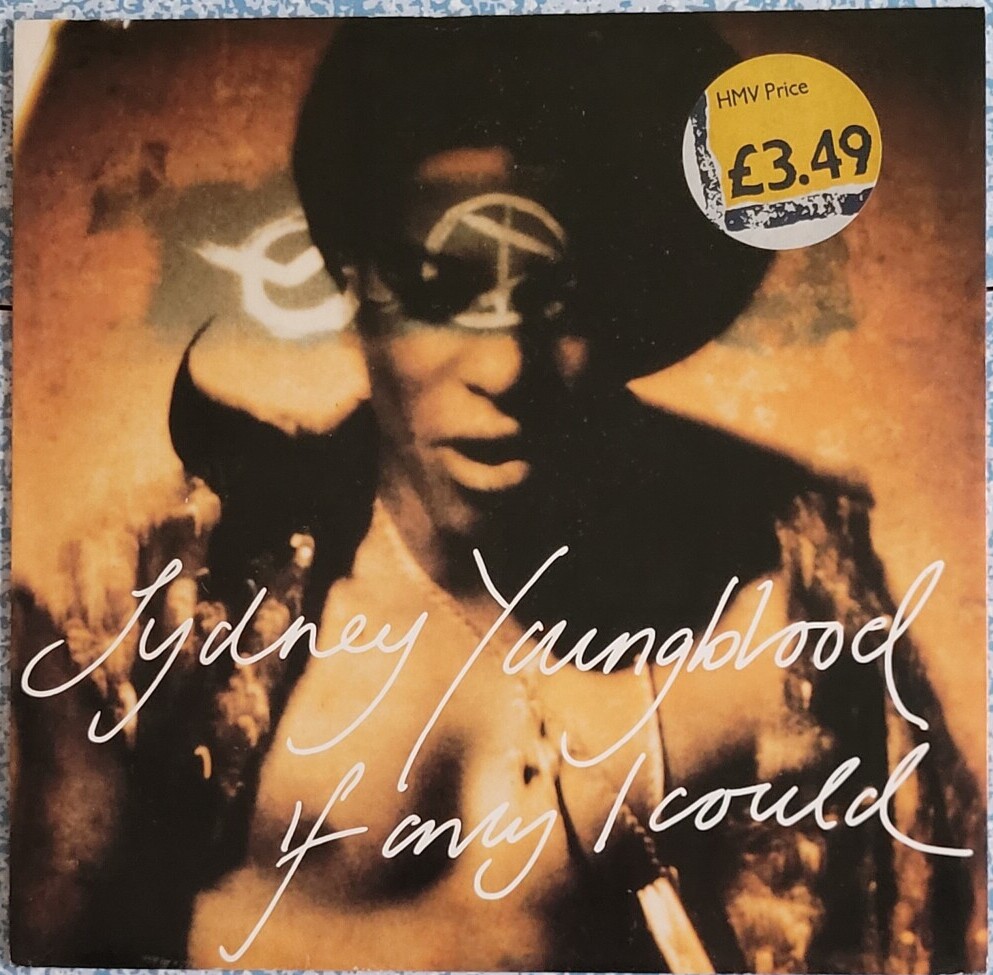
Sydney Youngblood’s If Only I Could.
I really loved this. It was a huge hit, reaching number 3 in the UK singles chart. It was Texan Sydney Youngblood’s biggest hit in the UK, blending soulful vocals with a catchy danceable melody.
This track blends elements of soul, pop, and dance music, characterized by its infectious groove and upbeat tempo. A memorable chorus and a polished production complement those soulful vocals. The song’s optimistic lyrics and danceable rhythm make it a feel-good anthem.
The track is about longing and desire for change. Youngblood expresses a yearning to overcome personal struggles. He wants to make a positive impact on the world.
So that was it for vinyl singles. But not the end for singles. After having my appendix removed 2 days before Christmas, I was soon itching to get back to spending money on music. I bought my first CD player just after Christmas. With a rightward list to protect my appendectomy scar, there was time to nip into Shrewsbury to buy my first CDs. These included a CD single with an appropriate title.
Deacon Blue – Queen Of The New Year
Deacon Blue were most famous for their 1988 single Real Gone Kid. Written about Maria McKee, this was the band’s first UK singles chart to ten, making number 8 in the UK singles chart.
Queen Of The New Year was the final single release from Deacon Blue’s 1988 album When The World Knows Your Name. Real Gone Kid was the first from the album. The track reached number 21 in the UK singles chart. Not stellar, but much more in line with the typical performance of the band’s singles.
It’s an upbeat and vibrant track. It captures the essence of celebration and renewal. Lyrically, it evokes the excitement and optimism associated with the start of a new year. It’s a typical Ricky Ross performance, complemented by the band’s blend of pop and rock elements.
Lively guitar riffs and dynamic percussion lend an infectious rhythm. It screams, “Get up and dance!”
The Legacy of 1989’s Music
The music of 1989 has left an enduring legacy that’s still felt today. The year was a turning point in several ways, and its influence has trickled down through the decades. The tracks that topped the charts back then are still referenced, covered, celebrated, and/or berated.
With Ride On Time by Black Box, we had another strand in the development of dance music. Even with the controversies that surrounded it at the time, it is an influence on countless artists and producers. Its lasting appeal is evident in the way it still gets people moving on dance floors today.
The Bangles’ Eternal Flame remains a benchmark for pop ballads. It has a timeless quality. It’s a well-crafted song which transcends its era. Even now, it touches the musical nerves of new generations of listeners.
Back To Life (However Do You Want Me) from Soul II Soul was groundbreaking then and continues to be held in high regard. The track has become a reference point for many. It shows how innovative sound can blend genres and influence numerous musical styles.
On the flip side, garbage like Jason Donovan’s Too Many Broken Hearts shows how the industry churns out commercial hits. Honestly, where is the artistic merit? This phenomenon hasn’t disappeared. It’s even more pronounced in today’s fast-paced music world.


Ultimately, the music of 1989 is as much a part of the fabric of eighties music as any other year of the decade. It has, therefore, woven itself into the fabric of contemporary culture. The year’s hits and misses have shaped tastes, honed genres, and set benchmarks. Artists still strive to measure themselves against them. The legacy of 1989 highlights the ever-evolving nature of music. It demonstrates its unending impact on our lives.
Conclusion
The magic of 1989 lies in its eclectic mix of sounds and the progression towards digital formats. It was a year where old met new, and boundaries were continually pushed.
The top-selling singles from this year encapsulate this transition perfectly. We had the powerhouse dance beats of Black Box, controversies included. There was the surprising yet annoying success of Jive Bunny. We were treated to The Bangles’ timeless charm and Soul II Soul’s genre-defining magic. Even Jason Donovan’s disposable pop serves as a cultural marker. A tooth curling one, but a cultural marker all the same.
I bought only 4 vinyl singles in 1989. I was very selective with my choices. The singles I bought – tracks by The Beautiful South, U2, and Sydney Youngblood – reflect the eclectic nature of my taste.
For good, bad, or indifferent, 1989’s music scene continues to influence today. It reminds us of the ever-changing yet cyclical nature of pop culture. What goes around, comes around. The legacy of 1989 is undeniably significant. It matters not whether this is through direct musical inspiration or as a touchstone of nostalgia.
Looking back, it’s clear that 1989 was a landmark year in the UK music scene. The musical, technical, and cultural innovations that took place influence how we experience and appreciate music today.